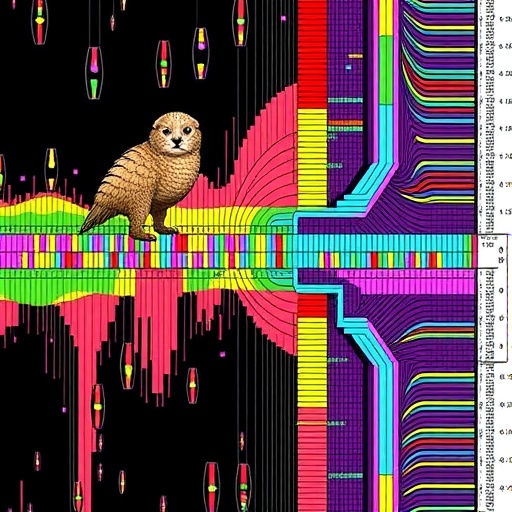
A human, an octopus, and a coral may appear to belong to entirely different worlds, yet their chromosomes preserve traces of a shared genomic past. More than 600 million years after the last common ancestor of all living animals, researchers have found that many of the chromosome-scale structures found across the animal kingdom still reflect ancient arrangements. A new study published in Science Advances presents the broadest comparison yet of animal chromosome architecture and shows that genomes do not reorganize randomly. Instead, they appear to move through a restricted set of evolutionary routes—what the researchers describe as “evolutionary highways”—shaped by chromosome fusions, splits, and irreversible mixing.
The study, led by researchers at the University of Vienna, analyzed more than 5,800 publicly available chromosome-scale genomes representing 4,454 species across 19 animal phyla. These genomes include representatives of radically different lineages, from vertebrates and mollusks to insects, sponges, cnidarians, and worms. By comparing the order and composition of chromosomes rather than focusing only on DNA sequence, the team created a unified framework for visualizing how animal genomes have changed over deep evolutionary time. The resulting map places each genome according to its chromosomal organization, allowing researchers to observe broad patterns that would be difficult to detect by examining species one at a time.
The distinction between a conventional genome sequence and a chromosome-scale genome is crucial. A draft genome can reveal which genes an organism possesses, but it may not show how those genes are arranged across complete chromosomes. Chromosome-scale assemblies provide that larger structural context by placing genes in their physical order along chromosomes. This organization can influence gene regulation, recombination, development, and the way entire regions of DNA are inherited. Until recently, too few high-quality chromosome-scale genomes were available to make meaningful comparisons across the animal tree of life. The rapid expansion of genomic databases has now made it possible to examine chromosome architecture at an unprecedented scale.
The researchers’ analytical system, called evolutionary genome topology, converts complex patterns of chromosome arrangement into a shared coordinate system. In this genomic landscape, species with similar chromosome structures occupy nearby positions, while lineages with highly unusual architectures appear in more isolated regions. The map suggests that animal genomes tend to follow particular trajectories rather than exploring every possible arrangement. Hundreds of living species preserve evidence of having traveled along these routes, while others appear to have diverged from them at different points and proceeded at different rates. Together, these patterns indicate that chromosome evolution is constrained by historical events and by the structural consequences of those events.
At the center of the process is a phenomenon the researchers call “fusion-with-mixing.” When two ancestral chromosomes join to form a single chromosome, the genes from the original chromosomes do not remain neatly separated. Over time, genetic exchange and rearrangement intermingle their contents. This mixed configuration creates a structural signature that cannot simply be reversed, even if the chromosome later splits or undergoes additional rearrangement. The result is a permanent genomic record of the fusion. Because the mixing is effectively one-way, it can serve as a powerful marker of common ancestry, helping scientists reconstruct relationships among animal groups that may be difficult to resolve using DNA sequence alone.
Chromosome number, therefore, tells only part of the story. Two species may possess the same number of chromosomes while having very different arrangements, or they may have different chromosome counts despite retaining recognizable pieces of an ancient genome. According to the study, changes in chromosome number can arise through both the joining of ancestral chromosomes and their later separation. Yet the structural consequences of fusion-with-mixing send lineages along different evolutionary paths. Once a chromosome has been remodeled in this way, returning to the original state is unlikely, meaning that genome evolution often behaves less like a reversible cycle and more like a branching network of one-way transitions.
This irreversibility gradually places major animal groups into distinct regions of what the researchers call “genome-architecture space.” Such separation can extend beyond chromosome structure itself. When large genomic regions are reorganized, the changes may affect genes involved in development, regulation, and cellular function. The study does not claim that chromosome architecture alone determines biological complexity or ecological success, but it provides a framework for testing whether particular structural transitions are associated with changes in development, gene regulation, or diversification. It may also help explain why some lineages retain distinctive genomic features long after their external forms and lifestyles have diverged.
The map could become especially valuable for identifying evolutionarily unusual animals. Mosquitoes, glass sponges, and earthworms, for example, occupy distinctive regions of the genomic landscape, reflecting chromosome architectures that have few close parallels among the sampled species. Such isolation may indicate a history of rare or extreme rearrangements, making these organisms important targets for further research. The framework could also support conservation biology by highlighting lineages whose genomic organization is unusually distinctive and therefore represents an irreplaceable component of animal biodiversity. In this context, preserving species means protecting not only visible traits and ecological roles, but also unique evolutionary histories embedded in their chromosomes.
The researchers say evolutionary genome topology may eventually allow scientists to model possible future directions of chromosome evolution. By combining large-scale comparative genomics with simulations, investigators could explore how chromosome fusions, splits, and mixing might influence the genomic trajectories of animal groups over millions of years. Such predictions would not determine the future of evolution, which remains shaped by mutation, selection, drift, and ecological change, but they could reveal which structural transitions are more plausible than others. For now, the study offers a new way to read the history of animal life: not as a random accumulation of genomic accidents, but as a set of constrained and often irreversible journeys through chromosome architecture.
Subject of Research: Comparative animal genomics and chromosome evolution
Article Title: Topological mixing and irreversibility in animal chromosome evolution
News Publication Date: 19-Aug-2026
Web References: https://doi.org/10.1126/sciadv.adz5561
References: Science Advances
Image Credits: Darrin Schultz
Keywords: animal genomes, chromosome evolution, evolutionary genome topology, chromosome fusion, genome architecture, comparative genomics, biodiversity conservation, evolutionary biology, genome rearrangement, chromosome-scale assemblies
Tags: animal chromosome architecturechromosome fusion and splitting eventschromosome mapping in vertebrates and invertebrateschromosome-scale genome comparisoncomparative genomics across animal phylaconserved chromosomal structuresdeep evolutionary history of animalsevolutionary highways in genome architectureevolutionary routes in animal genomesgenome evolution and biodiversitygenome reorganization and stabilitylarge-scale animal genome datasets