


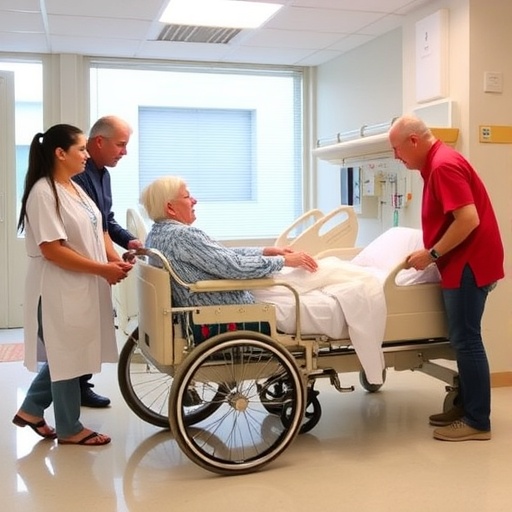
In today’s viral science news, researchers report encouraging evidence that a structured, participatory fall-prevention education program—known as APREAL—can reduce fall risk among older inpatients. The study targets patients housed in integrated nursing care wards, a setting where coordinated support could translate directly into safer daily routines.
Falls remain one of the most serious threats to older adults, often driven by a mix of medication effects, mobility changes, environmental hazards, and insufficient patient-specific training. Rather than relying on one-time pamphlets, the APREAL approach emphasizes active learning, participation, and practical skill reinforcement.
The quasi-experimental design compared outcomes before and after program implementation, tracking whether the intervention group showed improvements relative to baseline patterns. By focusing on education delivered in an interactive format, APREAL aims to strengthen patients’ ability to recognize risky situations and respond with safer movement behaviors.
Technically, participatory education is designed to influence both knowledge and self-efficacy—key psychological factors that can affect adherence to protective behaviors. When patients internalize strategies for safe transfers, walking, and recognizing early warning cues, the likelihood of unsafe actions during routine care may decline.
A notable strength of this work is its hospital applicability: older inpatients experience rapidly changing conditions, so education must be feasible within ward workflows. APREAL’s integration into integrated nursing care implies that staff-led delivery can be scaled without requiring complex equipment.
The findings, published in BMC Geriatrics in 2026, underscore the potential of combining patient engagement with care-team coordination. While educational interventions are sometimes criticized for inconsistent effects, this study suggests that a targeted program can produce measurable improvements in fall-prevention outcomes.
For readers following the latest viral science news, APREAL highlights a broader trend in healthcare: interventions that treat education as an active clinical tool rather than a passive information session. This shift may help hospitals standardize fall-prevention efforts and reduce preventable injuries.
If further studies replicate the results across diverse wards and patient profiles, participatory models like APREAL could become a practical component of geriatric safety programs worldwide.
Subject of Research: Fall-prevention education for older inpatients in hospital wards; geriatric patient safety.
Article Title: A participatory fall-prevention education program (APREAL) for older inpatients in integrated nursing care wards: a quasi-experimental study.
Article References: Kim, E., Kim, Y., Park, J. et al. A participatory fall-prevention education program (APREAL) for older inpatients in integrated nursing care wards: a quasi-experimental study. BMC Geriatr (2026). https://doi.org/10.1186/s12877-026-08018-0
Image Credits: AI Generated
DOI: https://doi.org/10.1186/s12877-026-08018-0
Keywords: Fall prevention; older inpatients; participatory education; quasi-experimental study; integrated nursing care.
Tags: environmental hazards and mobility changes in elderly inpatientsfalls prevention in elderly hospitalized patientshospital-based fall risk assessment and interventionimpact of self-efficacy on fall prevention among seniorsimproving safety protocols for hospitalized elderlyintegrated nursing care wards fall prevention strategiesinteractive learning for elderly patient safetyparticipatory patient education for fall risk reductionquasi-experimental study on fall prevention educationreinforcement of practical safety skills for older adultsrole of patient participation instructured fall-prevention programs in hospital settings


