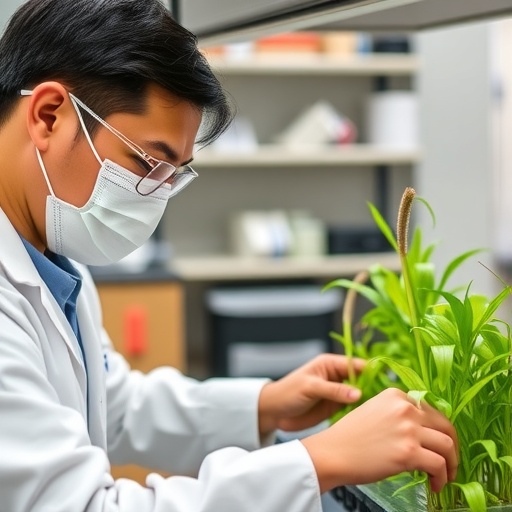
Researchers at King Abdullah University of Science and Technology (KAUST) report a technique that can insert large genetic cargo into plant genomes with high precision—an advance aimed at overcoming a long-standing bottleneck in plant biotechnology. Instead of limiting scientists to small edits, the method enables the addition of entirely new, longer gene sequences at predetermined genomic sites.
The development, described in Nature Biotechnology, could accelerate efforts to engineer crops with multilayered traits, such as improved tolerance to heat and drought, enhanced resistance to disease, and more efficient growth under stress. It also opens a route to plant-based biomanufacturing, where engineered plants could serve as scalable systems for producing therapeutics, biologics, and other high-value compounds.
Gene editing has been transformed by tools such as CRISPR, which can precisely change existing DNA. However, accurately inserting new genes—especially large ones—has remained much more challenging, largely due to difficulties in delivering bulky DNA segments and integrating them without unintended disruptions.
Many future agricultural and biomedical designs require multiple genes working together, meaning successful engineering will depend not only on editing, but also on dependable “site-specific” addition of large genetic instructions. The KAUST approach targets that need directly by focusing on where new DNA lands in the genome.
Rather than relying on pre-made DNA breaks commonly used in several insertion strategies, the KAUST team uses R2 retrotransposons to promote efficient, site-specific gene addition. Retrotransposons are mobile genetic elements that can integrate genetic material, and harnessing their integration behavior allows the researchers to position large sequences more reliably.
In experiments, the method demonstrated the ability to place full-length genes and other genetic elements into targeted locations within plant genomes. The researchers validated the system in both tobacco and rice, illustrating its applicability across different crop-relevant species.
While the work is still at the research stage, the authors emphasize that the new tool broadens the genome engineering toolkit available for plant scientists. By improving control over large-gene insertion, it could make complex trait construction more practical and scalable.
The study represents an early but significant step toward enabling plants to carry sophisticated genetic designs. In doing so, it provides a technical foundation for future engineering of multifunctional crops and plant-based production platforms.
Future advances in plant biotechnology will depend not only on our ability to edit genes, but also on our ability to add entirely new genetic instructions. This work addresses one of the biggest technical challenges in the field and provides researchers with a new tool for building more sophisticated biological traits in plants.
— Professor Magdy Mahfouz, KAUST
Subject of Research: Not applicable
Article Title: Efficient site-specific gene addition using R2 retrotransposons in tobacco and rice
News Publication Date: 21-Jul-2026
Web References: https://www.nature.com/articles/s41587-026-03181-6
References: Nature Biotechnology (Published study)
Image Credits:
Keywords: plant genome engineering, site-specific gene addition, R2 retrotransposons, genetic cargo, CRISPR contrast, tobacco, rice, synthetic biology, crop resilience, plant biomanufacturing, therapeutics
Tags: advancement in crop genetic modificationCRISPR and new gene editing tools in agricultureenhancing disease resistance in cropsimproving drought and heat tolerance in cropslarge DNA cargo delivery in plant biotechnologylarge gene sequence integration in plant genomesovercoming gene editing challenges in plantsPlant genome engineeringplant-based biomanufacturing techniquesprecise gene insertion in plantsscalable production of plant-derived therapeuticssite-specific plant gene editing