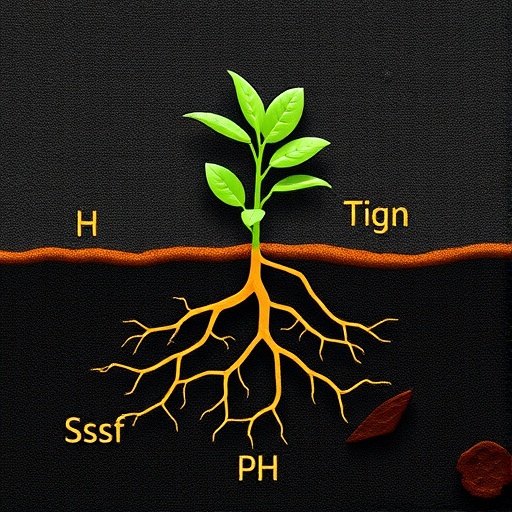
In a discovery that could reshape how scientists think about plant development, researchers report that the spatial “zoning” patterns emerging along growing roots do not depend on the acidity of the cell wall. The findings, published in Nature Plants, address a long-running assumption that pH gradients in the extracellular matrix help instruct where different developmental programs should turn on.
Roots are organized into functional regions—such as zones for cell division, elongation, and differentiation—that together build a continuous growth system. Because plant cell walls act as a chemically active interface between cells and their environment, many studies have linked local wall pH to processes like cell expansion, signaling, and hormone responsiveness.
To test whether wall acidity is a required organizer, the team combined developmental mapping with targeted perturbations of the cell wall environment. They examined how altering cell wall pH influenced the emergence and positioning of developmental zones. Instead of disrupting the characteristic patterning, the root’s zonation architecture remained largely intact.
The authors interpret this stability as evidence that root developmental identity is specified by mechanisms other than cell wall proton levels. In other words, even when the extracellular chemical conditions are shifted, the developmental program appears to retain positional information.
Technically, the work leverages quantitative imaging approaches to track developmental boundaries and correlate them with biochemical changes in the root wall. The results suggest that proton dynamics may modulate cell wall mechanics—such as loosening or strengthening during growth—without acting as the primary “map” that positions developmental states.
Why does this matter? If zonation is not governed by wall pH, then researchers must revisit how signals are integrated to produce robust spatial patterning under fluctuating soil chemistry. Plants often encounter variable nutrients, salinity, and microbial products that can alter local acidity; yet their developmental layout must remain reliable.
The study therefore reframes the role of cell wall chemistry as more modulatory than instructive for root regionalization. Future work will likely probe which intracellular or intercellular cues establish the developmental map and how they interface with wall mechanics during growth.
Overall, the research delivers a clear viral-science message: roots can keep their positional blueprint even when their cell walls change chemical complexion.
Subject of Research: Plant root developmental zonation and the role of cell wall pH
Article Title: Root developmental zonation is independent of cell wall pH
Article References: Krupař, P., Haeger, W., Huffer, L. et al. Root developmental zonation is independent of cell wall pH. Nat. Plants (2026). https://doi.org/10.1038/s41477-026-02339-z
Image Credits: AI Generated
DOI: https://doi.org/10.1038/s41477-026-02339-z
Tags: cell wall pH influence on plant growtheffects of environmental changes on root architectureextracellular matrix in plantsimpact of pH on plant cell signalinglong-term stability of root zonationmechanisms of root identity specificationplant cell wall chemistryplant developmental patterningplant developmental plasticityPlant root developmentroot growth zone differentiationroot zonation