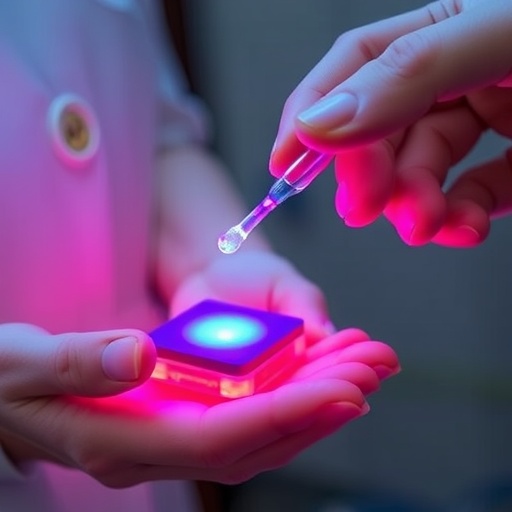
A groundbreaking advancement in organ transplantation has emerged from the Terasaki Institute for Biomedical Innovation in collaboration with Mayo Clinic Arizona, offering new hope for real-time assessment of donor liver viability. The team, led by Dr. Yangzhi Zhu, has engineered a wireless dual-compartment biosensing platform that continuously monitors critical biochemical markers during normothermic machine perfusion (NMP), a technique that keeps donor livers viable outside the body.
Liver transplantation faces significant hurdles due to the scarcity of organs and the challenge of accurately assessing organ health before surgery. NMP has enhanced preservation by maintaining livers at physiological temperatures with oxygenation, allowing function evaluation prior to transplantation. However, traditional methods only provide intermittent laboratory snapshots, limiting the ability to monitor dynamic metabolic changes.
The new biosensing platform revolutionizes this process by integrating sensors capable of simultaneously measuring pH, glucose, and lactate levels in both the circulating perfusate and bile produced by the liver. These real-time data streams are wirelessly transmitted to mobile devices, facilitating continuous biochemical surveillance within standard clinical workflows.
Pilot testing on seven human donor livers at Mayo Clinic underscored the system’s sensitivity, uncovering biochemical fluctuations and early indicators of organ stress that intermittent tests frequently miss. Notably, the inclusion of bile analysis revealed unique physiological insights, suggesting bile biochemistry may enhance the prediction of post-transplant outcomes when combined with perfusate data.
Dr. Zhu emphasized the transformative potential of this technology, highlighting its dual-compartment design as a crucial leap towards more informed transplantation decisions. By capturing a comprehensive metabolic fingerprint of the donor organ in real time, clinicians may soon refine organ assessment, ultimately improving transplant success rates.
Looking ahead, the research team plans to expand the platform’s biomarker repertoire and validate its efficacy in larger patient populations. There is also interest in leveraging continuous biochemical data to develop adaptive or automated perfusion protocols that dynamically optimize preservation conditions.
This innovation exemplifies the power of merging bioengineering precision with clinical needs, embodying the Terasaki Institute’s commitment to translational medical technologies. As organ transplantation continues to evolve, such biosensing platforms could redefine how surgeons evaluate and manage donor organs, potentially saving countless lives.
Subject of Research: Human tissue samples
Article Title: A Clinically Deployed Dual-Compartment Biochemical Monitoring Platform for Human Liver Perfusion
News Publication Date: July 14, 2026
Web References: http://dx.doi.org/10.1038/s41467-026-74799-y
Image Credits: Terasaki Institute for Biomedical Innovation
Keywords: Organ transplantation, biomedical engineering, biosensors, liver, medical diagnosis, clinical research
Tags: biochemical markers in organ transplantationcontinuous assessment of liver viabilitydual-compartment biosensing platformsearly detection of organ stressimproving donor liver utilizationinnovative approaches to organ preservationintegration of biosensors into clinical workflowsliver function monitoring during transplantationnormothermic machine perfusion technologyorgans preservation advancementsreal-time biosensors for liver transplantationwireless biochemical monitoring in organ preservation