Scientists Develop Cutting-Edge Technique to Analyze Compounds Released During Cupping Therapy
Cupping therapy, a traditional Chinese medicine practice known for treating chronic pain and aiding muscle recovery, operates by creating suction on the skin, thereby enhancing blood flow. However, until recently, the specific biochemical compounds released from the skin during the procedure remained largely unexplored. A breakthrough study published in ACS Omega reveals a novel noninvasive method to capture and analyze these skin-derived molecules, marking a significant advance in understanding the metabolic effects of cupping therapy.
The research team, led by Renato Zenobi and colleagues, devised an innovative approach that employs polymer-coated membranes to adsorb volatile compounds emanating from the skin during cupping. These membranes, placed inside cupping jars, collect airborne molecules which are then thermally released and analyzed via mass spectrometry, allowing precise identification and quantification. This method provides direct sampling at the source, a significant improvement over prior studies which focused on metabolites found only in blood or urine.
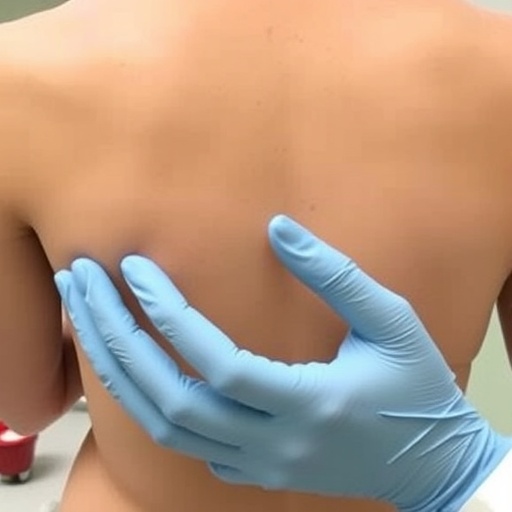
Initially validated using pig skin treated with compounds common to human skin, the technique demonstrated successful capture and detection of all test substances, confirming its efficacy. Subsequently, the researchers conducted a pilot study involving 12 healthy volunteers. Cups fitted with the specialized membranes were applied to participants’ backs and waists for ten minutes, reflecting typical treatment durations.
Comparative analysis of air collected from cupping jars with and without vacuum suction highlighted substantial differences in the concentrations of 13 metabolites and volatile compounds. This diverse group included aldehydes, ketones, alcohols, terpenes, and organic acids—many of which showed variations in levels post-treatment. The findings suggest that cupping triggers complex metabolic changes at the skin level, underscoring the therapy’s physiological impact beyond superficial effects.
Zenobi emphasizes that these results showcase the potential of modern analytical chemistry to deepen our understanding of traditional Chinese medicine modalities, historically underexplored in scientific literature. Nonetheless, he advises caution, noting that the current data are preliminary and require validation through expanded clinical studies involving larger cohorts and control groups.
Looking ahead, the research team plans to collaborate with local hospitals specializing in traditional Chinese medicine to investigate the therapy’s effects on individuals with chronic pain compared to healthy controls. Such studies could elucidate how cupping influences biochemical pathways and inform evidence-based practices in integrative medicine.
This pioneering work bridges a crucial knowledge gap, combining traditional therapeutic approaches with state-of-the-art chemical analysis. As more data emerge, the scientific community may uncover new biomarkers of treatment efficacy and deepen insights into the biochemical interplay between skin and health facilitated by cupping therapy.
Subject of Research: Cupping Therapy and Skin-Derived Volatile Compounds
Article Title: Measuring what cupping therapy pulls from the skin
News Publication Date: 10-Jun-2026
Web References: http://dx.doi.org/10.1021/acs.analchem.6c02559
Image Credits: Adapted from Analytical Chemistry 2026, DOI: 10.1021/acs.analchem.6c02559
Keywords
Cupping Therapy, Volatile Compounds, Skin Metabolites, Mass Spectrometry, Traditional Chinese Medicine, Polymer-Coated Membranes, Analytical Chemistry, Metabolic Profiling
Tags: analysis of skin-derived moleculesbiochemical analysis of skin suctionbiochemical compounds released during cuppingcapturing airborne molecules during cuppingcupping therapyinnovative methods in Chinese medicinemass spectrometry in traditional medicinemetabolic effects of cupping therapynoninvasive sampling techniquespilot study on cupping therapy effectspolymer-coated membranes for molecule capturevolatile skin compounds identification