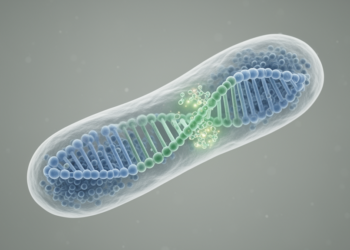
Credit: McKay Lab (UNC-Chapel Hill)
CHAPEL HILL, NC – Every animal starts as a clump of cells, which over time multiply and mature into many different types of cells, tissues, and organs. This is fundamental biology. Yet, the details of this process remain largely mysterious. Now, scientists at the University of North Carolina at Chapel Hill have begun to unravel an important part of that mystery.
Using the fruit fly Drosophila, a standard lab model for studying animal biology, the researchers discovered a cascade of molecular signals that program gene activity to drive the fly from one stage of maturation to the next, like a baby turning into an adult. Part of this programming, they found, involves alterations to the way DNA is packaged. Those alterations open up certain regions of DNA to allow gene activity and close off other regions to prevent gene activity. The scientists found evidence that these changes to DNA accessibility occur in sequence.
"We're finally getting at one of the core mechanisms in biology, which determine the timing and sequence of events in normal animal development at the level of our genes," said Daniel J. McKay, PhD, assistant professor of genetics at the UNC School of Medicine and biology at the UNC College of Arts and Sciences.
This basic biology finding could have significance for human health, too. The changes to cell reprogramming that the scientists observed in the young flies can occur inappropriately in adult human cells – spurring cancer, for example.
"We hope that this work will help us better understand what goes awry in cancer and other diseases," McKay said.
In the study, published in Genes & Development, McKay and colleagues began by examining the molecular impact of the fruit fly hormone ecdysone, which causes a young insect to shed its old form and adopt a new one as it moves toward maturity.
Scientists know that ecdysone binds to a receptor, EcR, in the nuclei of cells throughout the bodies of insects. EcR is a transcription factor, a genetic master switch. When bound by ecdysone, it turns on a particular set of genes. And those genes, in turn, are involved in the development of proteins – the machines of biology.
Analyzing Drosophila wing cells, McKay and colleagues found evidence that wing development occurs via a cascade of these changes in gene activity.
"We found first-tier genes that respond immediately to ecdysone, and then they – together with EcR – activate a second tier of genes, and then these two tiers of genes, operating in concert, act on a third tier," said McKay. "So we observed these waves of changes in gene expression that drive the development of wing tissue."
Using genome-wide sequencing technologies, McKay's team found that these changes in gene expression are associated with changes in the way DNA is "packaged."
DNA is looped around support proteins called histones, and this histone-DNA combination is called chromatin.
When chromatin is relatively loose and open, genes can become active. When chromatin is tight and closed, genes are mostly silenced. McKay and colleagues found that ecdysone activates some genes to produce special transcription factor proteins that open or close chromatin. This altering of chromatin represents a fundamental reprogramming of cells.
McKay and colleagues had shown in prior work that the pattern of chromatin accessibility in the fruit fly appears to change significantly over the course of development but can be very similar at any given time across fly tissues.
To the scientists, these findings collectively suggest that changes in chromatin leads to cascades of gene activity that drive fly development. That is, chromatin changes – over time – would help enforce the timing of the various processes underway during biological development. And these changes represent an important developmental mechanism, one that is likely at work in humans.
McKay and his team plan further research to study how these cascades of changing chromatin accessibility and gene activity differ from one part of the fly to another.
As McKay notes, this area of investigation could have relevance beyond developmental biology. The expression of growth and survival genes is normal during early biological development – when we're young. But cancerous cells, for example, use those genes to sustain runaway proliferation to cause disease.
Therefore, understanding the molecular factors that open or close chromatin – and allow or shut down the activity of these powerful genes – may give biologists a better picture of how cancers arise. Armed with that knowledge, scientists could try to create more precise weapons with which to fight cancer cells.
###
The study's lead authors were UNC graduate students Christopher M. Uyehara and Spencer L. Nystrom. Other co-authors were Matthew J. Niederhuber, Mary Leatham-Jensen, as well as Yiqin Ma and Laura A. Buttitta, from the University of Michigan.
This work was supported by funds from the UNC School of Medicine, the UNC College of Arts and Sciences, and the Integrative Program for Biological and Genome Sciences (iBGS).
Media Contact
Mark Derewicz
mark.derewicz@unchealth.unc.edu
984-974-1915
@UNC_Health_Care
############
Story Source: Materials provided by Scienmag