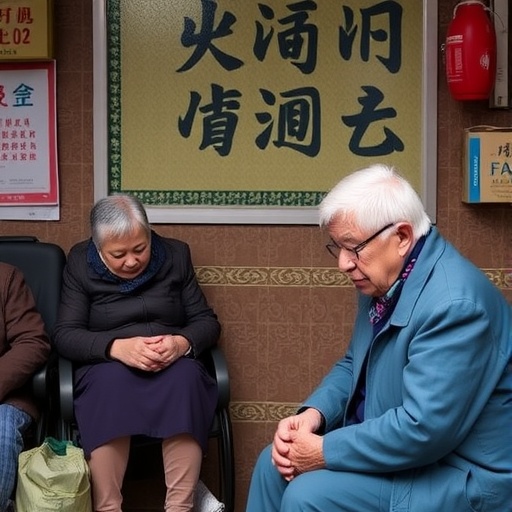
In recent years, there has been growing concern regarding the healthcare-seeking behaviors of older adults, particularly in regions undergoing rapid urbanization and socio-economic change. A compelling study authored by Luo, Liu, and Yang explores the stratified patterns of healthcare-seeking behavior among older adults in Fujian, China. The implications of their findings reach far beyond the immediate geography of their research. As the world grapples with an aging population, understanding these behavioral patterns becomes increasingly significant.
Fujian, a province characterized by its unique blend of traditional and modern lifestyles, serves as a microcosm for the global challenges of health inequality. The research uncovers the nuances that shape how older adults engage with healthcare systems, highlighting the disparity in access and utilization that can result from socio-economic status, education, and cultural beliefs. The study provides valuable insights that could inform policy and structural changes aimed at reducing inequalities in health service access among this vulnerable demographic.
One of the foundational aspects investigated by the researchers is the interplay between socio-economic status and healthcare-seeking behavior. The study reveals that older adults from higher socio-economic backgrounds tend to have more consistent and proactive healthcare-seeking behaviors. This contrasts sharply with their lower-income counterparts, who frequently experience barriers such as cost, transportation issues, and a lack of health literacy. The stark differences provide a potent reminder of the systemic inequities that exist within healthcare infrastructures.
Moreover, the authors dive deeper into the role of social networks and community support systems. In many cases, older adults rely heavily on their families or community resources for information about healthcare options. The researchers found that those embedded in stronger social networks were more likely to seek timely medical assistance. This aspect of the research underscores the importance of community cohesion in promoting health-seeking behavior. It also suggests that strategies aimed at strengthening social ties could have beneficial effects on health outcomes.
Cultural beliefs and attitudes toward aging further complicate healthcare-seeking behaviors in this demographic. The study indicates that older adults in Fujian may adhere to traditional beliefs that influence their perceptions of illness and treatment. For example, some may prioritize traditional Chinese medicine over conventional medical approaches, leading to delays in seeking formal healthcare services. Understanding these cultural dimensions is crucial for healthcare providers aiming to deliver more effective and culturally sensitive care.
In addition, the study examines gender differences in healthcare-seeking behavior among older adults. It highlights the fact that older women, often burdened with greater family responsibilities and societal expectations, may delay seeking care for themselves. The findings suggest that initiatives tailored specifically for older women might be needed to encourage more proactive health engagement. By addressing the unique barriers that women face, healthcare systems can create a more equitable environment for all.
A notable aspect of Luo and colleagues’ research is its methodological rigor. Employing both qualitative and quantitative approaches, the study captures a comprehensive view of healthcare-seeking behaviors. Through interviews, surveys, and statistical analysis, the authors present a multifaceted perspective that is essential for understanding this complex issue. The combination of different research techniques enhances the credibility and applicability of their findings.
The implications of the research extend to public health policy as well. By shedding light on the stratified patterns of healthcare-seeking behavior, policymakers are better equipped to design interventions that specifically address the needs of various demographic groups. This could involve targeted health education campaigns, subsidized healthcare services for low-income seniors, or programs that facilitate transportation for older adults who face mobility challenges.
Furthermore, the research stresses the necessity of integrating health services across sectors to address the multifactorial nature of health disparities. By collaborating with community organizations, social service agencies, and educational institutions, healthcare systems can create a more holistic approach to improve health outcomes for older adults. Such integration could lead to a more streamlined process in accessing healthcare, thus diminishing the barriers that many older adults currently face.
As the global population ages, the findings of Luo, Liu, and Yang resonate with urgency. Their research serves not only as a case study of Fujian but also as a model for examining healthcare-seeking behaviors in other regions worldwide. The insights gleaned from their work inform a broader understanding of the health challenges facing older adults in an increasingly complex healthcare landscape.
The study’s conclusions call for an immediate re-evaluation of how health services are delivered to older adults, particularly in rural regions. It’s vital for healthcare providers to understand the socio-cultural dynamics influencing health decisions in these communities. Recognizing that older adults are not a homogeneous group necessitates personalized care approaches that can effectively meet their diverse needs.
Ultimately, Luo and colleagues’ research advocates for a transformation in the approach to elderly care in China. By addressing the stratified healthcare-seeking behaviors identified in their study, stakeholders can take meaningful steps toward reducing health inequalities and promoting health equity among older adults. The study stands as a clarion call to reimagine healthcare systems not just as providers of services but as facilitators of health empowerment for all older adults, regardless of their socio-economic or cultural backgrounds.
In conclusion, the findings of this pivotal research urge all stakeholders—policy-makers, healthcare providers, and community organizations—to engage actively in a discourse around healthcare accessibility and health-seeking behaviors among older adults. The challenge lies not only in recognizing the factors that drive health inequalities but also in implementing actionable strategies that promote inclusivity and support for this essential segment of the population. By prioritizing equity in healthcare access, society can make profound strides towards ensuring that all older adults lead healthier, more fulfilling lives.
Subject of Research: Healthcare-seeking behavior among older adults in Fujian, China.
Article Title: Stratified patterns of healthcare-seeking behavior among older adults in Fujian, China: exploring the behavioral foundations of health inequality.
Article References:
Luo, W., Liu, J., Yang, H. et al. Stratified patterns of healthcare-seeking behavior among older adults in Fujian, China: exploring the behavioral foundations of health inequality.
BMC Health Serv Res (2025). https://doi.org/10.1186/s12913-025-13882-4
Image Credits: AI Generated
DOI: 10.1186/s12913-025-13882-4
Keywords: Healthcare-seeking behavior, older adults, health inequality, socio-economic status, cultural beliefs, Fujian, China.
Tags: aging population challengescultural beliefs and healthcare utilizationdisparities in healthcare access for seniorseducation and health service engagementFujian province health researchhealth inequality in Fujianhealthcare-seeking behavior in older adultspolicy implications for health equitysocio-economic status and healthcare accesstraditional vs modern healthcare practicesurbanization effects on healthcarevulnerability of older adults in healthcare