In an era where antimicrobial resistance poses an increasing threat to global health, researchers are turning to the natural world to seek innovative solutions. The study of spider silk and its potential applications has garnered considerable attention in recent years, particularly due to its remarkable properties, including tensile strength and biocompatibility. Recent investigations led by Glenszczyk, Lis, and Porc, presented in their systematic review published in Front Zool, delve into an intriguing aspect of spider biology that remains largely unexplored—the possible antimicrobial factors within spider cocoons. This enticing inquiry sheds light on the profound synergy between natural materials and modern biomedical applications.
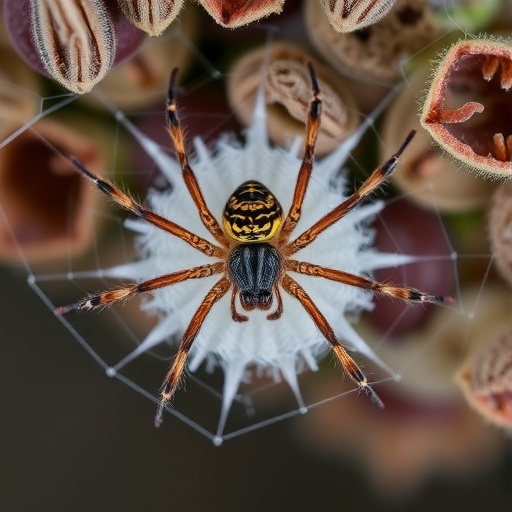
Spider silk is not merely a means of web construction or prey capture; it serves various critical functions in the life cycle of spiders. One fascinating facet of spider silk is its structural composition, which involves proteins known as fibroins. These proteins impart unique mechanical properties, making spider silk a material of choice for researchers interested in biomimicry and the development of synthetic alternatives. While the mechanical aspects of spider silk have been well documented, the potential antimicrobial properties of spider cocoons warrant further examination.
The systematic review focused specifically on the composition and properties of spider cocoons. Unlike traditional spider silk, cocoons serve as protective barriers for eggs, showcasing a different set of materials and structural intricacies. The cocoon’s biological purpose includes safeguarding developing offspring from environmental challenges and potential pathogens. This leads to a tantalizing question: Could these natural structures harbor antimicrobial compounds that can be harnessed for medical applications?
Examining various studies that explored the biochemical properties of spider cocoons, the authors encountered a breadth of evidence suggesting the presence of antimicrobial factors. Among these, peptides and proteins with known antimicrobial activity were identified. Such findings elevate spider cocoons to a status that could transform them into key players in the fight against multidrug-resistant microorganisms, a significant public health concern.
The review highlighted several groups of spiders whose cocoons display varying structural properties. Research indicates that different species may produce cocoons with distinct biochemical profiles, suggesting a potential for biodiversity in antimicrobial applications. Among the spider families discussed, the Nephilidae and Araneidae stand out for their unique silk production and cocoon architecture. The implications are profound when considering the vast range of spider species that populate the Earth, which could lead to a wellspring of biomolecules waiting to be uncovered.
As the team delved deeper, they unearthed evidence documenting the interaction between cocoon materials and bacterial cultures. These experiments revealed the ability of cocoon extracts to inhibit bacterial growth, providing a promising avenue for further exploration. Antimicrobial efficacy was not uniform across the samples tested, indicating that some cocoons may offer superior protective benefits than others.
The potential of spider cocoon antimicrobial factors extends beyond mere theoretical applications. The integration of these natural compounds into biomedical technologies — such as wound dressings or surgical materials — could revolutionize infection control practices. The quest for natural alternatives to synthetic antibiotics could see massive shifts towards sustainable solutions, with spider cocoons playing an instrumental role in the development of cutting-edge medical products.
Moreover, the environmental implications of harnessing spider-derived materials cannot be overlooked. By utilizing naturally occurring substances, it becomes feasible to reduce dependency on synthetic compounds, addressing both the environmental footprint of pharmaceutical manufacturing and the problem of resistance. The renewable nature of spider silk and the structural diversity of spider cocoons present a biotechnological frontier ripe for exploration.
Though the research landscape is promising, there remain substantial challenges. The practicalities of large-scale cocoon extraction and processing require innovative solutions to ensure sustainability while meeting potential commercial demands. Additionally, the complexities of regulatory approval for new antimicrobial agents pose a further barrier that must be navigated through diligent research and empirical trials.
In conclusion, the systematic review presented by Glenszczyk, Lis, and Porc opens the door to a novel vista in antimicrobial research. The exploration of spider cocoons as potential reservoirs of antimicrobial properties unveils not just new scientific knowledge but also a paradigm shift in how we approach the challenge of bacterial resistance. With ongoing research and technological advancements, the marriage of natural products and modern medicine could yield powerful therapies, propelling us toward a future where nature’s solutions play a pivotal role in safeguarding human health.
Considerations about the biological roles of spider cocoons and their potential applications foreshadow an exciting chapter in microbiology and materials science. Scientists are called upon to push the boundaries of understanding to unearth the full potential of these fascinating creatures and their ecological contributions. Inspired creativity may lead to the synthesis of novel therapeutic agents, leveraging the elegance of evolution to shape the future of antimicrobial solutions and restore the balance in the fight against pathogens.
As we continue to investigate this captivating intersection of biology and medical science, it is clear that spider cocoons may, indeed, have much more to offer than what initially meets the eye. This inquiry stands as a testament to the endless discoveries that await us in the natural world, waiting to be harnessed for the betterment of human health.
Subject of Research: Spider cocoons and their antimicrobial properties.
Article Title: The apple of discord: can spider cocoons be equipped with antimicrobial factors?—a systematic review.
Article References:
Glenszczyk, M., Lis, A., Porc, W. et al. The apple of discord: can spider cocoons be equipped with antimicrobial factors?—a systematic review. Front Zool 22, 9 (2025). https://doi.org/10.1186/s12983-025-00563-5
Image Credits: AI Generated
DOI: https://doi.org/10.1186/s12983-025-00563-5
Keywords: Spider silk, antimicrobial properties, spider cocoons, biomedicine, antimicrobial resistance, natural products, biomimicry.
Tags: antimicrobial properties of spider cocoonsantimicrobial resistance and natural remediesbiomimicry in material scienceexploring spider silk for synthetic alternativesfibroins and spider silk structureinnovative research on spider silknatural materials for health solutionspotential of spider cocoons in medicinespider biology and antimicrobial factorsspider silk applications in biomedical fieldssynergy between nature and technologysystematic review of spider cocoon properties