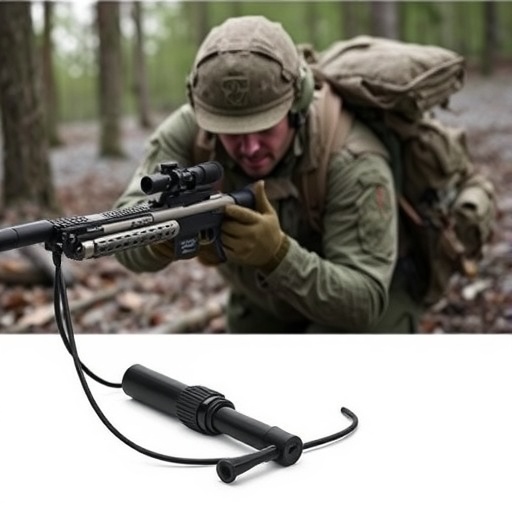
In an era where rapid advancements in medical technology are essential, the development of a portable field endoscope has taken center stage, providing promising solutions in both military and civilian applications. Researchers Sun, Zeng, and Wu have embarked on a thorough evaluation and application study of this innovative device, spotlighting its crucial role in addressing specific challenges faced in battlefield medical care, alongside requisite biosafety concerns. The potential of such a device to transform emergency medical responses in high-pressure environments cannot be overstated.
The portable field endoscope represents a significant leap forward in medical imaging technology. Unlike traditional endoscopes, which can be bulky and difficult to transport, this new model is designed to be lightweight and user-friendly, allowing for easy operation in critical situations. Its compact size ensures that it can be easily carried by medical personnel in the field, making it an ideal solution for military medics who often operate in austere environments where immediate access to medical facilities is not available. This adaptability highlights the pressing need for the integration of sophisticated medical devices into the toolkit of frontline healthcare providers.
A key highlight of the research is the emphasis on addressing battlefield-specific injuries. Combat zones frequently present unique medical challenges due to the nature of trauma suffered by soldiers. Conventional endoscopic procedures can be cumbersome and unsuitable for rapid diagnosis and treatment in such environments. The portable endoscope’s design incorporates elements intended to facilitate real-time imaging and diagnosis, helping medics make informed decisions quickly. This can drastically improve patient outcomes when time is of the essence, further underscoring the value of advancing medical technologies to keep pace with evolving battlefield realities.
Moreover, biosafety considerations are paramount in the development of this portable device. In environments where contamination risks are high, such as in battlefields or during disease outbreaks, ensuring the safety and cleanliness of medical equipment is critical. The innovators behind the portable endoscope have integrated features that promote easy sterilization and decontamination processes. This consideration is vital not just for the health of medical personnel, but also for preventing potential outbreaks from surgical environments that may inadvertently become vectors for infectious diseases.
Field trials, as documented in ongoing research, indicate that the portable endoscope performs exceptionally well under various conditions. The device has been rigorously tested to ensure operational reliability, even when subjected to the stresses of outdoor environments. The imaging quality provided by the endoscope also meets or exceeds current standards, allowing practitioners to visualize internal structures with high clarity and detail.
Another aspect that sets this portable endoscope apart is its connectivity features, which allow real-time data transfer. Medics in the field can transmit images and findings to remote specialists for guidance, thereby enhancing collaborative care. This remote consultation capability is especially useful in complicated cases where immediate expertise is required but unavailable on-site. By bridging the gap between frontline responders and medical experts, the portable endoscope sets a new standard for cooperative care during emergencies.
The implications of this innovation extend beyond military applications. In remote areas where access to healthcare is limited, this portable device could empower local practitioners, enabling them to perform necessary procedures that would otherwise require complex logistical support. This adaptability promotes human health on a broader scale, potentially revolutionizing how medical services are delivered in underserved regions across the globe.
Training and education on the use of the portable endoscope are critical components of its successful integration into medical practice. With a focus on enhancing the skillset of medics and healthcare providers, the research team emphasizes the importance of comprehensive training programs. Such programs not only boost confidence among users but also ensure that they can leverage the full capabilities of the device effectively. With sufficient training, the endoscope’s sophistication becomes an asset rather than an obstacle.
As the research progresses, the collaboration among biomedical engineers, military personnel, and medical experts continues to evolve, fostering an interdisciplinary approach to the challenges at hand. Engaging different stakeholders in the design and application phases has resulted in a more robust product tailored specifically to the needs of its end users. This collaborative mindset exemplifies how innovation thrives in environments that encourage shared insights and expertise.
Public interest in military medical advancements is growing, but understanding the implications of such innovations can often be complex. Education and outreach are crucial to bridging this gap, allowing civilians to appreciate the significance of technologies developed for military use. This understanding is paramount, as it not only promotes greater support for funding such innovations but also inspires the next generation of engineers and medical professionals to pursue advancements that can save lives.
In summary, the development of a portable field endoscope represents an exciting frontier in both military and civilian healthcare. It is a tangible example of how technology can enhance medical care in challenging environments, ultimately saving lives and improving the quality of healthcare delivery. By continuing to invest in such innovations, we can ensure that frontline medical practitioners are equipped with the best tools to provide optimal care, regardless of the circumstances they face.
As we look ahead, the ongoing research and development of this portable field endoscope may pave the way for even further advancements in telemedicine and field diagnostics. The future of medical technology is certainly bright, especially as we continue to draw from cross-disciplinary insights and foster an environment of innovation aimed at addressing modern medical challenges head-on.
The potential for protecting soldiers and civilians alike through advancements in medical technology such as this is profound. As innovative solutions like the portable field endoscope continue to emerge, the integration of advanced engineering with medical expertise will play a pivotal role in shaping the future of healthcare.
The findings and applications discussed signal an important milestone in emergency medical response, adapting to the demands of modern warfare and beyond. As every moment counts in medical emergencies, innovations such as the portable field endoscope will undoubtedly uphold the vital principles of medical care in any context, reaffirming the commitment to saving lives against all odds.
Subject of Research: Portable field endoscope development and application for military and biosafety purposes.
Article Title: Evaluation and application of an innovative portable field endoscope: addressing battlefield and biosafety concerns.
Article References:
Sun, G., Zeng, JQ., Wu, JL. et al. Evaluation and application of an innovative portable field endoscope: addressing battlefield and biosafety concerns.
Military Med Res 12, 57 (2025). https://doi.org/10.1186/s40779-025-00644-w
Image Credits: AI Generated
DOI: https://doi.org/10.1186/s40779-025-00644-w
Keywords: portable endoscope, military medicine, biosafety, medical technology, emergency response, field trials, healthcare innovation.
Tags: advancements in endoscopic imagingbattlefield medical technologybiosafety in battlefield carecivilian applications of military technologycombat zone healthcare challengesemergency medical response innovationsfrontline healthcare provider toolslightweight endoscopy solutionsmilitary medical devicesportable field endoscopeportable medical imaging technologyuser-friendly medical equipment