• HOME
  • NEWS
  • EXPLORE
    • CAREER
      • Companies
      • Jobs
    • EVENTS
    • iGEM
      • News
      • Team
    • PHOTOS
    • VIDEO
    • WIKI
  • BLOG
  • COMMUNITY
    • FACEBOOK
    • INSTAGRAM
    • TWITTER
Tuesday, November 10, 2026
BIOENGINEER.ORG
No Result
View All Result
  • Login
  • HOME
  • NEWS
  • EXPLORE
    • CAREER
      • Companies
      • Jobs
        • Lecturer
        • PhD Studentship
        • Postdoc
        • Research Assistant
    • EVENTS
    • iGEM
      • News
      • Team
    • PHOTOS
    • VIDEO
    • WIKI
  • BLOG
  • COMMUNITY
    • FACEBOOK
    • INSTAGRAM
    • TWITTER
No Result
View All Result
Bioengineer.org
No Result
View All Result
Home NEWS Science News Chemistry

Bioinspired protein creates stretchable 2D layered materials

Bioengineer by Bioengineer
July 25, 2022
in Chemistry
Reading Time: 2 mins read
0
Flexible material
Share on FacebookShare on TwitterShare on LinkedinShare on RedditShare on Telegram

UNIVERSITY PARK, Pa. — Nature creates layered materials like bone and mother-of-pearl that become less sensitive to defects as they grow. Now researchers have created, using biomimetic proteins patterned on squid ring teeth, composite layered 2D materials that are resistant to breaking and extremely stretchable.
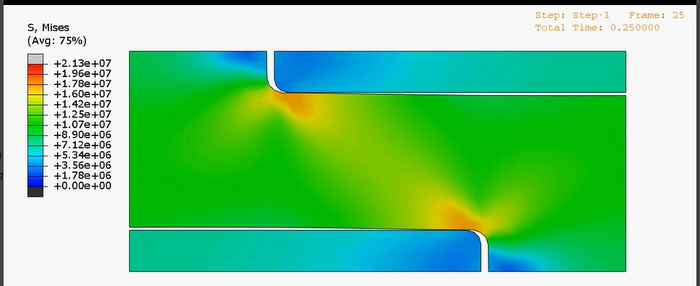
Flexible material

Credit: Burcu Dursun, Penn State

UNIVERSITY PARK, Pa. — Nature creates layered materials like bone and mother-of-pearl that become less sensitive to defects as they grow. Now researchers have created, using biomimetic proteins patterned on squid ring teeth, composite layered 2D materials that are resistant to breaking and extremely stretchable.

“Researchers rarely reported this interface property for the bone and nacre because it was difficult to measure experimentally,” said Melik Demirel, Lloyd and Dorothy Foehr Huck Chair in Biomimetic Materials and director of the Center for Advanced Fiber Technologies, Penn State.

Composite 2D materials are made up of atom-thick layers of a hard material, like graphene or a MXene — usually a transition metal carbide, nitride or carbonitride — separated by layers of something to glue the layers together. While large chunks of graphene or MXenes have bulk properties, 2D composites’ strength comes from interfacial properties.

“Because we are using an interfacial material that we can modify by repeating sequences, we can fine tune the properties,” said Demirel. “We can make it very flexible and very strong at the same time.”

He noted that the materials can also have unique thermal conduction regimes, or properties, spreading heat in one direction more strongly than at 90 degrees. The results of this work were published today (July 25th) in the Proceedings of the National Academy of Sciences.

“This material would be great for insoles for running shoes,” said Demirel. “It could cool the foot and the repeated flexing would not break the insole.”

These 2D composites could be used for flexible circuit boards, wearable devices and other equipment that requires strength and flexibility.

According to Demirel, traditional continuum theory does not explain why these materials are both strong and flexible, but simulations demonstrated that the interface matters. What apparently happens is that with a higher percent of the material composed of the interface, the interface breaks in places when the material is under stress, but the material as a whole does not break.

“The interface breaks, but the material doesn’t,” said Demirel. “We expected them to become compliant, but all of a sudden it is not only compliant, but super stretchy.”

Others working on this project form Penn State were Mert Vural, postdoctoral fellow; Tarek Mazeed, postdoctoral fellow; Oguzhan Colak, graduate student; and Reginald F. Hamilton, associate professor all in Engineering Science and Mechanics.

Also working on this research were Dong Li, and Huajian Gao, professor of mechanical and aerospace engineering, both at Nanyang Technological University, Singapore.           

The Defense Advanced Research Projects Agency; the Army Research Office; Nanyang Technological University; and the agency for Science, Technology and Research, Singapore, supported this work. Calculations were done at the A*STAR Computational Resource Centre, National Supercomputing Centre, Singapore.


Journal

Proceedings of the National Academy of Sciences

Share12Tweet8Share2ShareShareShare2

Related Posts

Bacterial Enzyme Covalently Captures Food Carcinogen Acrylamide via Surface Cysteine Residue

Bacterial Enzyme Covalently Captures Food Carcinogen Acrylamide via Surface Cysteine Residue

November 10, 2026
Generative AI System Develops Open-Source Quantum Chemistry Software in Ten Weeks

Generative AI System Develops Open-Source Quantum Chemistry Software in Ten Weeks

November 10, 2026

Computational Study Identifies Novel CHRM4 Binding Mode for Prostate Cancer

November 10, 2026

Allulose Syrup in Baked Oat Bars Elevates Acrylamide Formation Above Safety Limits

November 10, 2026

POPULAR NEWS

  • Intranasal Lidocaine Spray Eases Nasogastric Tube Placement in Adult Emergency Patients

    Intranasal Lidocaine Spray Eases Nasogastric Tube Placement in Adult Emergency Patients

    29 shares
    Share 12 Tweet 7
  • Hospital Outbreaks Disseminate Ceftazidime-Avibactam and Cefiderocol Co-Resistant Klebsiella Pneumoniae Clones

    29 shares
    Share 12 Tweet 7
  • PET Imaging Shows Aging Reduces Human Brain Ascorbic Acid Transport via Choroid Plexus

    29 shares
    Share 12 Tweet 7
  • Plant Hemoglobin Expression Impairs Aerobic Guaiacol Bioconversion in Pseudomonas putida

    29 shares
    Share 12 Tweet 7

About

We bring you the latest biotechnology news from best research centers and universities around the world. Check our website.

Follow us

Recent News

Distally Based Medial Leg Flaps Maintained Coverage in Small Ankle Study

Eastern European Oncology Panel Evaluates Metastatic Colorectal Cancer Management and Fruquintinib Adoption

Bacterial Enzyme Covalently Captures Food Carcinogen Acrylamide via Surface Cysteine Residue

Subscribe to Blog via Email

Enter your email address to subscribe to this blog and receive notifications of new posts by email.

Join 87 other subscribers
  • Contact Us

Bioengineer.org © Copyright 2023 All Rights Reserved.

Welcome Back!

Login to your account below

Forgotten Password?

Retrieve your password

Please enter your username or email address to reset your password.

Log In
No Result
View All Result
  • Homepages
    • Home Page 1
    • Home Page 2
  • News
  • National
  • Business
  • Health
  • Lifestyle
  • Science

Bioengineer.org © Copyright 2023 All Rights Reserved.