• HOME
  • NEWS
  • EXPLORE
    • CAREER
      • Companies
      • Jobs
    • EVENTS
    • iGEM
      • News
      • Team
    • PHOTOS
    • VIDEO
    • WIKI
  • BLOG
  • COMMUNITY
    • FACEBOOK
    • INSTAGRAM
    • TWITTER
Saturday, February 7, 2026
BIOENGINEER.ORG
No Result
View All Result
  • Login
  • HOME
  • NEWS
  • EXPLORE
    • CAREER
      • Companies
      • Jobs
        • Lecturer
        • PhD Studentship
        • Postdoc
        • Research Assistant
    • EVENTS
    • iGEM
      • News
      • Team
    • PHOTOS
    • VIDEO
    • WIKI
  • BLOG
  • COMMUNITY
    • FACEBOOK
    • INSTAGRAM
    • TWITTER
  • HOME
  • NEWS
  • EXPLORE
    • CAREER
      • Companies
      • Jobs
        • Lecturer
        • PhD Studentship
        • Postdoc
        • Research Assistant
    • EVENTS
    • iGEM
      • News
      • Team
    • PHOTOS
    • VIDEO
    • WIKI
  • BLOG
  • COMMUNITY
    • FACEBOOK
    • INSTAGRAM
    • TWITTER
No Result
View All Result
Bioengineer.org
No Result
View All Result
Home NEWS Science News Biology

‘Backpacking’ hedgehogs take permanent staycation

Bioengineer by Bioengineer
July 22, 2021
in Biology
Reading Time: 3 mins read
0
IMAGE
Share on FacebookShare on TwitterShare on LinkedinShare on RedditShare on Telegram

IMAGE

Credit: University of Otago

New University of Otago research has been examining how alpine-based hedgehogs hibernate from a different perspective – their backs.

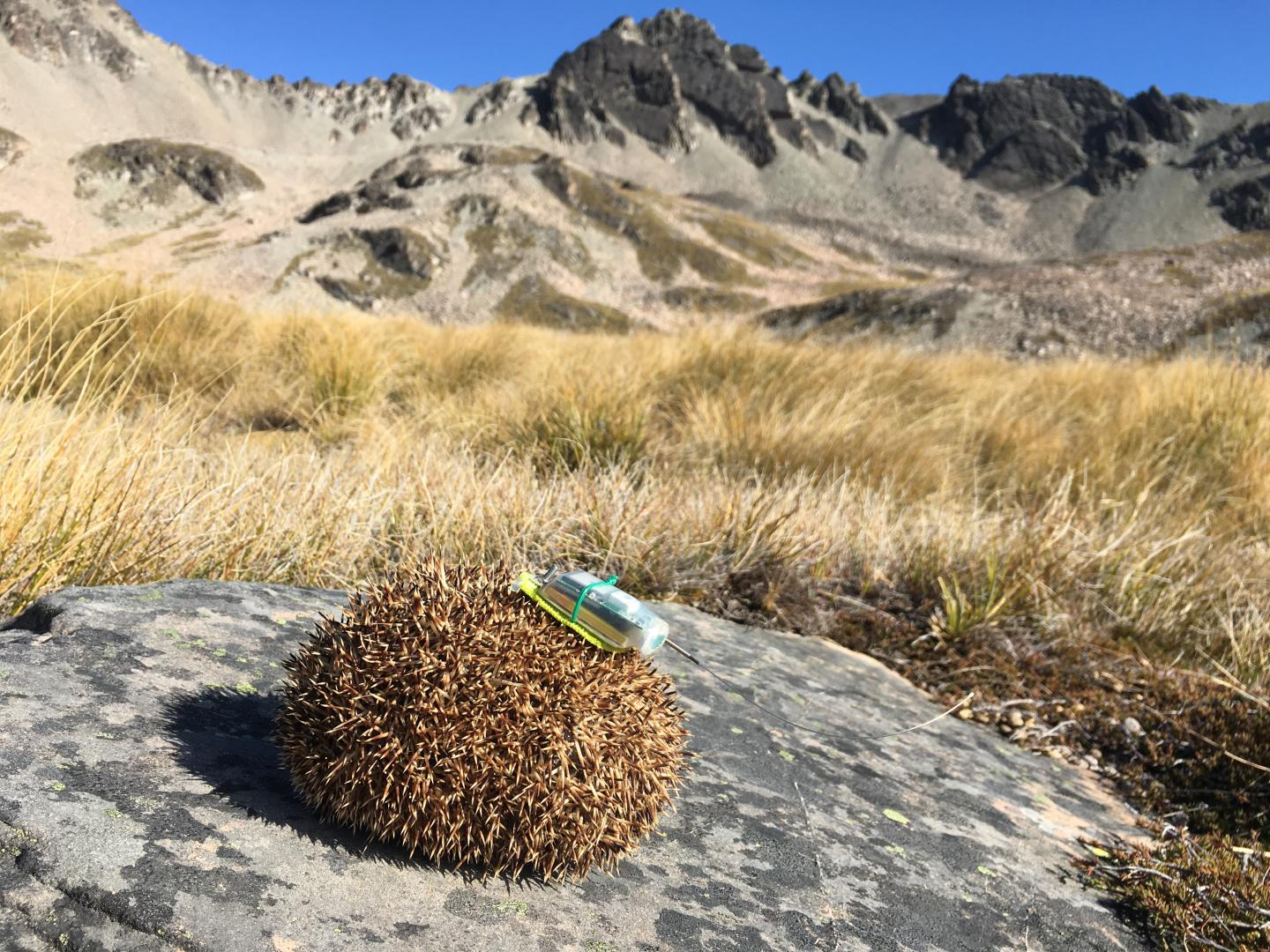
Dr Nick Foster from the Department of Zoology has been involved with the Te Manahuna Aoraki project and has been attaching small transmitting ‘backpacks’ onto hedgehogs in the Mackenzie Basin’s alpine zones. The mammals are considered pests in New Zealand for the damage they cause to native insects and wildlife throughout the country.

The goal of this study, which has just been published in the New Zealand Journal of Ecology, was to find out whether hedgehogs, which can be found up to 2000 metres in summer, travel to lower elevations when winter threatens.

“We thought that hedgehogs could be making short distance movements downhill, which would extend their foraging and breeding season and avoid the harsh winter conditions of the high alpine zone,” Dr Foster says.

However instead of moving to lower and warmer areas, Foster found hedgehogs stayed put and hibernated in the colder areas in the elevated alpine areas, which are up to 1800 metres above sea level. Some of the females were found rearing young, too.

“They entered hibernation in the same areas they used in the summer, and while we only tracked a small sample of females, they all did the same thing,” he says.

“This is pretty convincing evidence that hedgehogs aren’t just visitors in these zones: they’re residents.”

While imagining a hedgehog with a backpack going on an adventure is a cute idea, Dr Foster says the mammals need to be seen as harmful to our environment.

“When we think of predators, we think of stoats, possums and rats. In dryland environments, hedgehogs and feral cats are among the worst.”

At the centre of the research are the GPS transmitters that were fixed onto the back of the hedgehogs as they hibernated.

While a little prickly to handle and quite thin on the ground in the alpine zone, Foster says hedgehogs are very easy animals to work with.

“You can attach a transmitter directly to their spines. There is no collar, no contact with the skin, and there is no feeling in their spines, which are a similar material to our fingernails. Spines regrow after they are clipped and devices fall off as they naturally shed.

“Hedgehogs carry devices well, too. This is a species that piles on fat every year to hibernate, so their bodies can deal with fluctuations in weight.”

Dr Foster says the devices had to be up to the task.

“It’s very cold in that area, and there’s a lot of wear and tear. However, once we got started it was pretty smooth going.”

He says there are some important conclusions that can be drawn from this relatively simple study.

“Finding that hedgehogs persist in alpine zones means that if we want to remove hedgehogs from areas, we have to factor in populations living high in the mountains. Otherwise they’ll be around forever and act as a source of reinvasion for lower areas.”

On a positive note, once removed, it may be some time for hedgehog populations to spread up to these areas again.

“This is good news for our strategy of using mountain ranges to keep them out.”

###

For more information, please contact:

Dr Nick Foster

Department of Zoology

University of Otago

Email [email protected]

Media Contact
Matiu Workman
[email protected]

Original Source

https://www.otago.ac.nz/news/news/otago830877.html

Related Journal Article

http://dx.doi.org/10.20417/nzjecol.45.52

Tags: AgricultureEcology/EnvironmentFertilizers/Pest Management
Share12Tweet8Share2ShareShareShare2

Related Posts

Florida Cane Toad: Complex Spread and Selective Evolution

Florida Cane Toad: Complex Spread and Selective Evolution

February 7, 2026
New Study Uncovers Mechanism Behind Burn Pit Particulate Matter–Induced Lung Inflammation

New Study Uncovers Mechanism Behind Burn Pit Particulate Matter–Induced Lung Inflammation

February 6, 2026

DeepBlastoid: Advancing Automated and Efficient Evaluation of Human Blastoids with Deep Learning

February 6, 2026

Navigating the Gut: The Role of Formic Acid in the Microbiome

February 6, 2026
Please login to join discussion

POPULAR NEWS

  • Robotic Ureteral Reconstruction: A Novel Approach

    Robotic Ureteral Reconstruction: A Novel Approach

    82 shares
    Share 33 Tweet 21
  • Digital Privacy: Health Data Control in Incarceration

    63 shares
    Share 25 Tweet 16
  • Study Reveals Lipid Accumulation in ME/CFS Cells

    57 shares
    Share 23 Tweet 14
  • Breakthrough in RNA Research Accelerates Medical Innovations Timeline

    53 shares
    Share 21 Tweet 13

About

We bring you the latest biotechnology news from best research centers and universities around the world. Check our website.

Follow us

Recent News

Digital Health Perspectives from Baltic Sea Experts

Florida Cane Toad: Complex Spread and Selective Evolution

Exploring Decision-Making in Dementia Caregivers’ Mobility

Subscribe to Blog via Email

Enter your email address to subscribe to this blog and receive notifications of new posts by email.

Join 73 other subscribers
  • Contact Us

Bioengineer.org © Copyright 2023 All Rights Reserved.

Welcome Back!

Login to your account below

Forgotten Password?

Retrieve your password

Please enter your username or email address to reset your password.

Log In
No Result
View All Result
  • Homepages
    • Home Page 1
    • Home Page 2
  • News
  • National
  • Business
  • Health
  • Lifestyle
  • Science

Bioengineer.org © Copyright 2023 All Rights Reserved.