• HOME
  • NEWS
  • EXPLORE
    • CAREER
      • Companies
      • Jobs
    • EVENTS
    • iGEM
      • News
      • Team
    • PHOTOS
    • VIDEO
    • WIKI
  • BLOG
  • COMMUNITY
    • FACEBOOK
    • INSTAGRAM
    • TWITTER
Sunday, December 14, 2025
BIOENGINEER.ORG
No Result
View All Result
  • Login
  • HOME
  • NEWS
  • EXPLORE
    • CAREER
      • Companies
      • Jobs
        • Lecturer
        • PhD Studentship
        • Postdoc
        • Research Assistant
    • EVENTS
    • iGEM
      • News
      • Team
    • PHOTOS
    • VIDEO
    • WIKI
  • BLOG
  • COMMUNITY
    • FACEBOOK
    • INSTAGRAM
    • TWITTER
  • HOME
  • NEWS
  • EXPLORE
    • CAREER
      • Companies
      • Jobs
        • Lecturer
        • PhD Studentship
        • Postdoc
        • Research Assistant
    • EVENTS
    • iGEM
      • News
      • Team
    • PHOTOS
    • VIDEO
    • WIKI
  • BLOG
  • COMMUNITY
    • FACEBOOK
    • INSTAGRAM
    • TWITTER
No Result
View All Result
Bioengineer.org
No Result
View All Result
Home NEWS Science News

Mixed farming methods could reduce US emissions and increase productivity

Bioengineer by Bioengineer
September 6, 2025
in Science News
Reading Time: 2 mins read
0
IMAGE
Share on FacebookShare on TwitterShare on LinkedinShare on RedditShare on Telegram

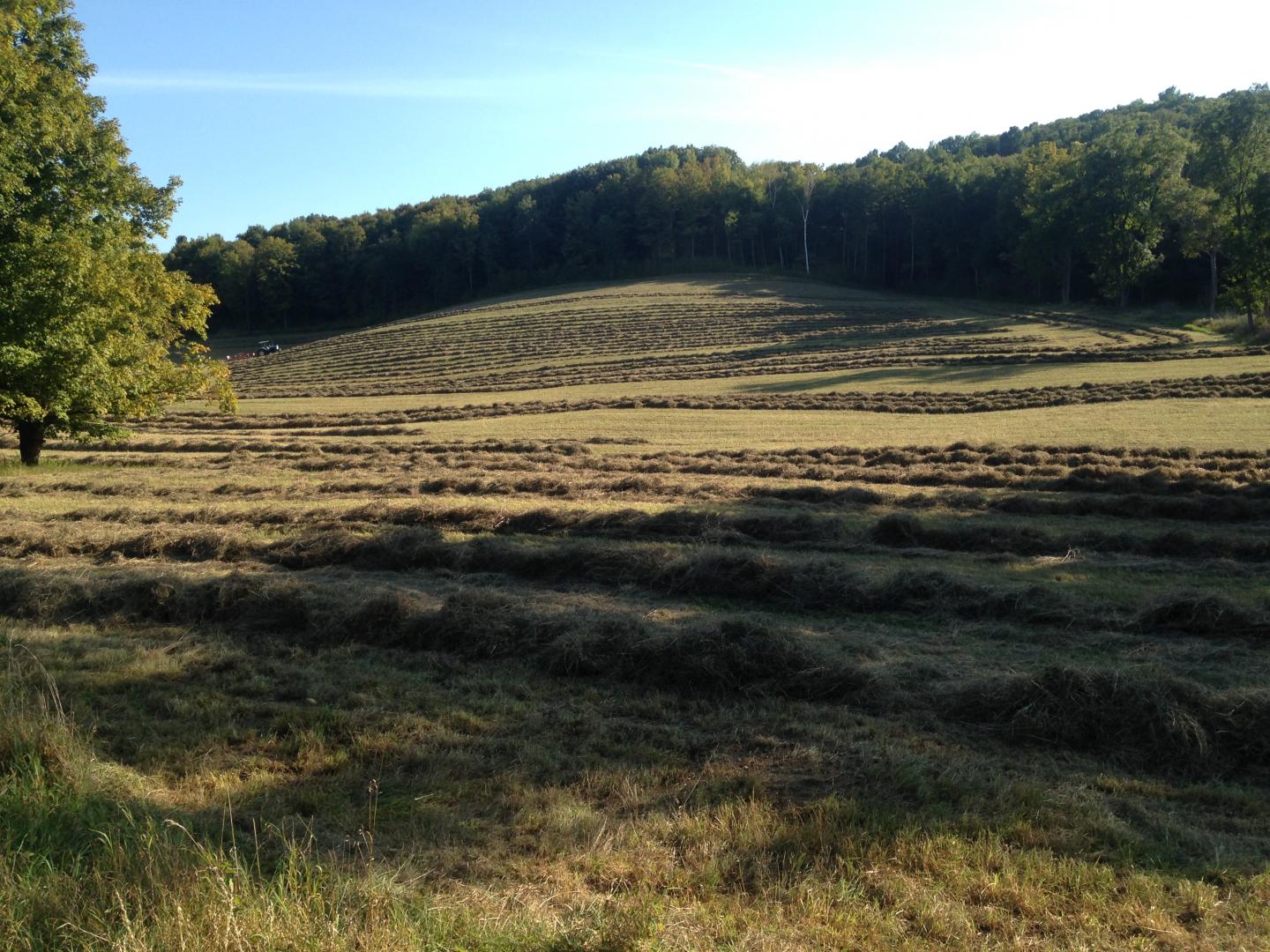
Modeled nitrogen-sparing farms across the US exceeded demand for protein but produced 20% less beef

Small-scale mixed-use agriculture that avoids synthetic fertilizers in favor of manure could eliminate agricultural greenhouse gas emissions if established across the United States’ 100 million hectares of lush high quality cropland, according to a study by Gidon Eshel, publishing 3rd June 2021 in the open-access journal PLOS Biology. The minor catch: beef consumption would need to decrease, but by only 20%.

Beef is the most resource-intensive food item that we regularly put into our shopping carts — for every gram of protein, beef uses 7 times more cropland and 20 times as much water and emits 11 times the greenhouse gases. At the same time, cattle manure is a valuable source of natural fertilizer. Nitrogen-sparing agriculture avoids external inputs of nitrogen, such as synthetic fertilizers, instead relying on cattle manure and nitrogen-fixing crops to replenish soil nutrients.

To find out whether nitrogen-sparing practices could provide for a US population of 330 million, Eshel created a mathematical model of nitrogen-sparing agriculture across all high quality, lush cropland in the contiguous United States, totaling 100 million hectares. Eshel divided this area into identical mixed-use farm units that integrated intensive cattle farming with production of fruit, vegetables, grains, nuts, and cattle forage.

The modeled farming practices eliminated 55% of current nitrogen fertilizer use and eliminated agricultural greenhouse gas emissions. They also increased productivity and total protein production — the modeled farms yielded 110% of current consumption and produced a more protein-rich diet — but reduced beef production by 20% – 30%. Nitrogen-sparing practices could help reduce agricultural greenhouse gas emissions and minimize harmful fertilizer run-off, but their success will depend on complex societal, economic, and political factors, the author says.

Dr. Eshel notes, “While small-scale regenerative farming has been promoted for many years, nobody quite knew whether it can feed the populace. Without taking sides in this raging debate, I set out to agnostically test whether such practices can or cannot produce enough food. I developed a mathematical model of such farms dotting the contiguous U.S. landscape, but only where precipitation is bountiful and the soil of high quality, and found that such farms can in fact handily feed the U.S., including delivering four fifths of today’s beef consumption and quite dramatically improve nutrition and by extension public health”.

###

Research article

Peer reviewed; Observational study; Humans

In your coverage please use these URLs to provide access to the freely available articles in PLOS Biology: http://journals.plos.org/plosbiology/article?id=10.1371/journal.pbio.3001264

Citation: Eshel G (2021) Small-scale integrated farming systems can abate continental-scale nutrient leakage. PLoS Biol 19(6): e3001264. https://doi.org/10.1371/journal.pbio.3001264

Funding: The author received no specific funding for this work.

Competing Interests: The author has declared that no competing interests exist.

Media Contact
Gidon Eshel
[email protected]

Related Journal Article

http://dx.doi.org/10.1371/journal.pbio.3001264

Tags: BiologyBusiness/EconomicsEarth ScienceEcology/EnvironmentGeology/SoilNaturePlant SciencesPollution/RemediationPublic Health
Share13Tweet8Share2ShareShareShare2

Related Posts

Cardiometabolic Changes After 6-Month Intermittent Fasting

December 14, 2025

Chronic Ototoxicity Triggers Early Hair Cell Gene Shutdown

December 14, 2025

Ovarian Cancer: New Insights and Treatment Innovations

December 14, 2025

Study: Physical Performance Better Predicts Diabetes Risk

December 14, 2025
Please login to join discussion

POPULAR NEWS

  • Scientists Uncover Chameleon’s Telephone-Cord-Like Optic Nerves, A Feature Missed by Aristotle and Newton

    Scientists Uncover Chameleon’s Telephone-Cord-Like Optic Nerves, A Feature Missed by Aristotle and Newton

    121 shares
    Share 48 Tweet 30
  • Nurses’ Views on Online Learning: Effects on Performance

    69 shares
    Share 28 Tweet 17
  • NSF funds machine-learning research at UNO and UNL to study energy requirements of walking in older adults

    70 shares
    Share 28 Tweet 18
  • MoCK2 Kinase Shapes Mitochondrial Dynamics in Rice Fungal Pathogen

    71 shares
    Share 28 Tweet 18

About

We bring you the latest biotechnology news from best research centers and universities around the world. Check our website.

Follow us

Recent News

Cardiometabolic Changes After 6-Month Intermittent Fasting

Chronic Ototoxicity Triggers Early Hair Cell Gene Shutdown

Ovarian Cancer: New Insights and Treatment Innovations

Subscribe to Blog via Email

Enter your email address to subscribe to this blog and receive notifications of new posts by email.

Join 69 other subscribers
  • Contact Us

Bioengineer.org © Copyright 2023 All Rights Reserved.

Welcome Back!

Login to your account below

Forgotten Password?

Retrieve your password

Please enter your username or email address to reset your password.

Log In
No Result
View All Result
  • Homepages
    • Home Page 1
    • Home Page 2
  • News
  • National
  • Business
  • Health
  • Lifestyle
  • Science

Bioengineer.org © Copyright 2023 All Rights Reserved.