• HOME
  • NEWS
  • EXPLORE
    • CAREER
      • Companies
      • Jobs
    • EVENTS
    • iGEM
      • News
      • Team
    • PHOTOS
    • VIDEO
    • WIKI
  • BLOG
  • COMMUNITY
    • FACEBOOK
    • INSTAGRAM
    • TWITTER
Friday, June 26, 2026
BIOENGINEER.ORG
No Result
View All Result
  • Login
  • HOME
  • NEWS
  • EXPLORE
    • CAREER
      • Companies
      • Jobs
        • Lecturer
        • PhD Studentship
        • Postdoc
        • Research Assistant
    • EVENTS
    • iGEM
      • News
      • Team
    • PHOTOS
    • VIDEO
    • WIKI
  • BLOG
  • COMMUNITY
    • FACEBOOK
    • INSTAGRAM
    • TWITTER
  • HOME
  • NEWS
  • EXPLORE
    • CAREER
      • Companies
      • Jobs
        • Lecturer
        • PhD Studentship
        • Postdoc
        • Research Assistant
    • EVENTS
    • iGEM
      • News
      • Team
    • PHOTOS
    • VIDEO
    • WIKI
  • BLOG
  • COMMUNITY
    • FACEBOOK
    • INSTAGRAM
    • TWITTER
No Result
View All Result
Bioengineer.org
No Result
View All Result
Home NEWS Science News Health

Mockingbird song decoded

Bioengineer by Bioengineer
September 6, 2025
in Health
Reading Time: 2 mins read
0
IMAGE
Share on FacebookShare on TwitterShare on LinkedinShare on RedditShare on Telegram

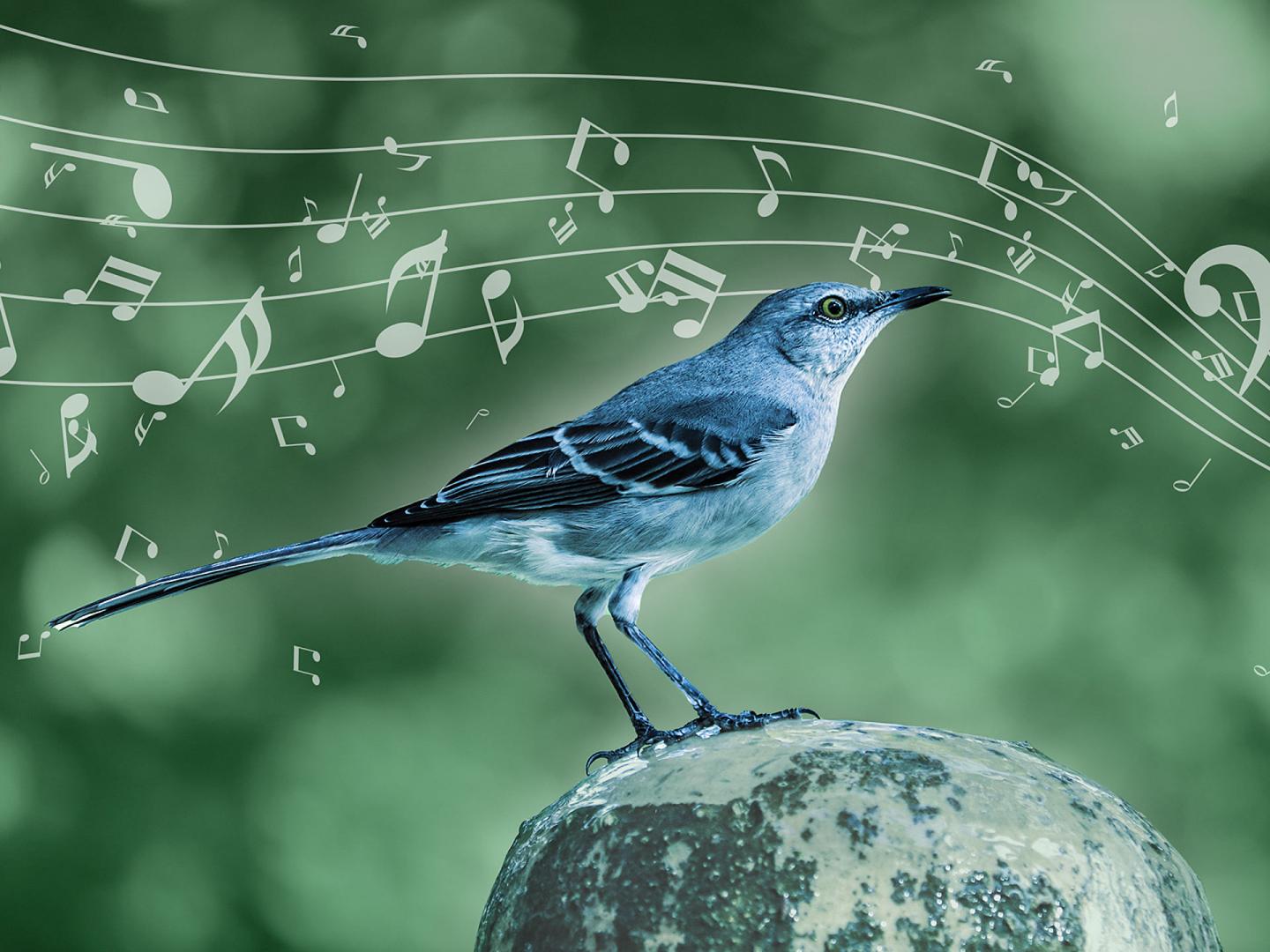
Mockingbirds follow similar musical rules as those found in human music, from Beethoven to Kendrick Lamar

The North American mockingbird is famous for its ability to imitate the song of other birds. But it doesn’t just mimic its kindred species, it actually composes its own songs based on other birds’ melodies. An interdisciplinary research team has now worked out how exactly the mockingbird constructs its imitations. The scientists determined that the birds follow similar musical rules as those found in human music, from Beethoven to Kendrick Lamar.

The song of the mockingbird is so complex that to investigate it required a joint effort of experts from very different fields. Neuroscientist Tina Roeske of the Max Planck Institute for Empirical Aesthetics, field biologist Dave Gammon of Elon University, and the music philosopher David Rothenberg of the New Jersey Institute of Technology combined their different approaches and areas of expertise to conduct this highly unusual study, the findings of which have just been published in the open-access journal Frontiers in Psychology.

Lead author Tina Roeske designed the algorithms used in testing the team’s hypotheses.

“When you listen for a while to a mockingbird,” she explains, “you can hear that the bird isn’t just randomly stringing together the melodies it imitates. Rather, it seems to sequence similar snippets of melody according to consistent rules. In order to examine this hunch scientifically, however, we had to use quantitative analyses to test whether the data actually supported our hypotheses.”

The results were unambiguous. The authors identified four compositional strategies that mockingbirds use in transitioning from one sound to the next: changing timbre, changing pitch, stretching the transition (lengthening it in time), and squeezing it (shortening it in time). The complex melodies they create are music to the ears not only of other birds but of humans as well. So, it should come as no surprise that (human) composers of varied musical styles use similar techniques in their work.

As co-author David Rothenberg explains in a YouTube video, the Tuvan throat singing group Huun-Huur-Tu presents examples of timbre change, and pitch change can be heard in the famous opening of Beethoven’s Fifth Symphony; the song “Show Yourself” from the Disney film Frozen 2 itself shows the stretching of sound transitions; and if you listen very closely to Kendrick Lamar’s song “Duckworth” from the album Damn, you’ll hear transitions being squeezed, or shortened.

###

Original Publication:

Roeske, T. C., Rothenberg, D., & Gammon, D. E. (2021). Mockingbird Morphing Music: A Taxonomy of Transitions in a Complex Bird Song. Frontiers in Psychology, 12, 1143. doi:10.3389/fpsyg.2021.630115

Media Contact
Dr. Keyvan Sarkhosh
[email protected]

Original Source

https://www.aesthetics.mpg.de/en/the-institute/news/news-article/article/mockingbird-song-decoded

Related Journal Article

http://dx.doi.org/10.3389/fpsyg.2021.630115

Tags: Arts/CultureneurobiologySocial/Behavioral Science
Share13Tweet8Share2ShareShareShare2

Related Posts

Tracking Lanthanide-Labeled Microplastics in Plants

June 25, 2026

Neural Design Enables Zero-Shot Drug-Binding Proteins

June 25, 2026

Genomic Insights into Human Skin Fungi Diversity

June 25, 2026

Chiral Laser Gyroscopes Surpass Lock-In Limit

June 25, 2026
Please login to join discussion

POPULAR NEWS

  • Saying Goodbye to PGY-6: Pediatric Fellowship Realities

    103 shares
    Share 41 Tweet 26
  • Multi-Hospital Study Reveals Long Covid Burden Is Twice as High as Current Estimates

    92 shares
    Share 36 Tweet 23
  • Detection of EDCs in Breast Milk and Infant Urine Up to Six Months Highlights Early Exposure Risks

    77 shares
    Share 31 Tweet 19
  • New Drug Candidate Developed at McMaster Shows Potential for Treating Brain Cancer

    58 shares
    Share 23 Tweet 15

About

We bring you the latest biotechnology news from best research centers and universities around the world. Check our website.

Follow us

Recent News

Tracking Lanthanide-Labeled Microplastics in Plants

POSTECH Researchers Slash Cost of Reconstituted Cell-Free Systems by 95%

AI and Physics Collaborate to Design Advanced Hydrogen Storage Materials

Subscribe to Blog via Email

Success! An email was just sent to confirm your subscription. Please find the email now and click 'Confirm' to start subscribing.

Join 82 other subscribers
  • Contact Us

Bioengineer.org © Copyright 2023 All Rights Reserved.

Welcome Back!

Login to your account below

Forgotten Password?

Retrieve your password

Please enter your username or email address to reset your password.

Log In
No Result
View All Result
  • Homepages
    • Home Page 1
    • Home Page 2
  • News
  • National
  • Business
  • Health
  • Lifestyle
  • Science

Bioengineer.org © Copyright 2023 All Rights Reserved.