• HOME
  • NEWS
  • EXPLORE
    • CAREER
      • Companies
      • Jobs
    • EVENTS
    • iGEM
      • News
      • Team
    • PHOTOS
    • VIDEO
    • WIKI
  • BLOG
  • COMMUNITY
    • FACEBOOK
    • INSTAGRAM
    • TWITTER
Thursday, July 2, 2026
BIOENGINEER.ORG
No Result
View All Result
  • Login
  • HOME
  • NEWS
  • EXPLORE
    • CAREER
      • Companies
      • Jobs
        • Lecturer
        • PhD Studentship
        • Postdoc
        • Research Assistant
    • EVENTS
    • iGEM
      • News
      • Team
    • PHOTOS
    • VIDEO
    • WIKI
  • BLOG
  • COMMUNITY
    • FACEBOOK
    • INSTAGRAM
    • TWITTER
  • HOME
  • NEWS
  • EXPLORE
    • CAREER
      • Companies
      • Jobs
        • Lecturer
        • PhD Studentship
        • Postdoc
        • Research Assistant
    • EVENTS
    • iGEM
      • News
      • Team
    • PHOTOS
    • VIDEO
    • WIKI
  • BLOG
  • COMMUNITY
    • FACEBOOK
    • INSTAGRAM
    • TWITTER
No Result
View All Result
Bioengineer.org
No Result
View All Result
Home NEWS Science News

IPK scientists identify networks for spikelet formation in barley

Bioengineer by Bioengineer
April 28, 2021
in Science News
Reading Time: 2 mins read
0
IMAGE
Share on FacebookShare on TwitterShare on LinkedinShare on RedditShare on Telegram

IMAGE

Credit: IPK / Eva Siebenhühner

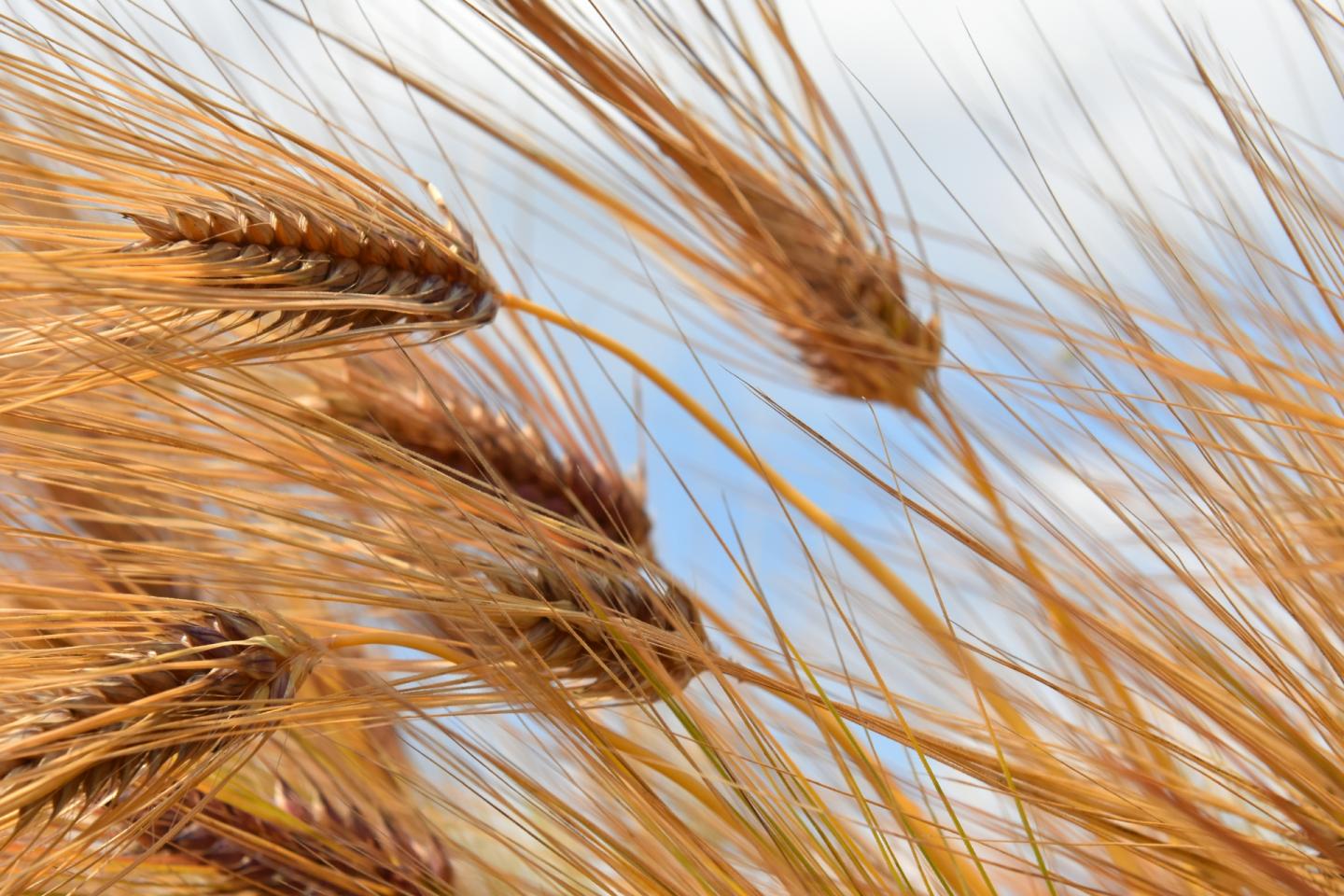
Organ development in plants mostly occurs through combinatorial activity of so-called meristems. Meristems are plant cells or tissues that give rise to new organs, similar to stem cells in human – including spikelets. Spikelets are components of the spike and form florets (flowers) themselves, which in turn produce grains after fertilisation.

Inflorescence morphogenesis in grasses (Poaceae) is complex and based on a specialised floral meristem, the spikelet meristem, from which all other floral organs arise and which also gives rise to the grain. The fate of the spikelet thus determines not only reproductive success, but also numerous yield-related traits in cereal crops such as wheat and barley. “In view of the goal of creating as much food security as possible for a growing world population, this study is therefore a key contribution”, says Prof. Dr. Thorsten Schnurbusch, head of the independent research group Plant Architecture at the IPK, HEISENBERG professor at the IPK and Martin Luther University Halle-Wittenberg and initiator of the project. The results have now been published in the journal Science Advances.

The international research team led by the IPK Leibniz Institute was now interested in identifying and describing regulatory networks, signalling pathways and key regulators of barley floral meristems. “To do this, we first excised the finest tissue parts – and thus particularly pure tissue – in a spatially very limited area using a laser”, explained Dr. Johannes Thiel, first author of the study. These excised meristems were subsequently analysed in detail. “We have obtained an unparalleled resolution of the transcripts that convert genes into proteins and are thus ultimately involved in barley floral organ formation”, says Dr. Ravi Koppolu, also first author of the study.

Sequence analyses of the floral meristems make it possible to understand whether certain genes are expressed in the spike, i.e. whether the genetic information of a gene is expressed and appears. “So it’s about how the genotype of a plant is expressed as a phenotype”, says Prof. Dr. Thorsten Schnurbusch.

He is firmly convinced that these findings will be of great importance for further comparative studies in other cereal crops. “This will make more data analyses possible; and thus, an even better understanding of very specific processes of spike formation.” For example, in a collaborative effort with Canadian colleagues from the University of Toronto the scientists from the IPK developed a database which enables researchers to find the graphical representation of desired candidate genes and their expression profiles within the barley spike.

“On the one hand, we have gained a deeper understanding of the regulatory networks and, on the other hand, we can now provide the scientific community with an important tool that facilitates follow-up works and faster progress,” concludes Prof. Dr. Thorsten Schnurbusch.

###

Media Contact
Prof. Dr. Thorsten Schnurbusch
[email protected]

Related Journal Article

http://dx.doi.org/10.1126/sciadv.abf0832

Tags: BiodiversityBiologyCell BiologyFood/Food ScienceGenesPlant Sciences
Share13Tweet8Share2ShareShareShare2

Related Posts

Steatosis Drives Liver Metastasis Diversity in CRC — Medicine

Steatosis Drives Liver Metastasis Diversity in CRC

July 2, 2026

Unlocking the Mysteries of Alzheimer’s Disease

July 2, 2026

Pensoft Introduces New Peer-Reviewed Journal of Regeneration to Advance Restorative Biology Across Species

July 2, 2026

Evolution-Inspired Biosensors Revolutionize Lipid Tracking in Real Time

July 2, 2026
Please login to join discussion

POPULAR NEWS

  • Detection of EDCs in Breast Milk and Infant Urine Up to Six Months Highlights Early Exposure Risks

    77 shares
    Share 31 Tweet 19
  • Saying Goodbye to PGY-6: Pediatric Fellowship Realities

    103 shares
    Share 41 Tweet 26
  • New Drug Candidate Developed at McMaster Shows Potential for Treating Brain Cancer

    58 shares
    Share 23 Tweet 15
  • KTU Researchers Explore Ultrasound’s Role in Enhancing Blood Flow Beyond Diagnostics

    53 shares
    Share 21 Tweet 13

About

BIOENGINEER.ORG

We bring you the latest biotechnology news from best research centers and universities around the world. Check our website.

Follow us

Recent News

Steatosis Drives Liver Metastasis Diversity in CRC

Unlocking the Mysteries of Alzheimer’s Disease

Pensoft Introduces New Peer-Reviewed Journal of Regeneration to Advance Restorative Biology Across Species

Subscribe to Blog via Email

Enter your email address to subscribe to this blog and receive notifications of new posts by email.

Join 83 other subscribers
  • Contact Us

Bioengineer.org © Copyright 2023 All Rights Reserved.

Welcome Back!

Login to your account below

Forgotten Password?

Retrieve your password

Please enter your username or email address to reset your password.

Log In
No Result
View All Result
  • Homepages
    • Home Page 1
    • Home Page 2
  • News
  • National
  • Business
  • Health
  • Lifestyle
  • Science

Bioengineer.org © Copyright 2023 All Rights Reserved.