Attraction expert delivers good news for anyone dating during lockdown
Credit: Routledge
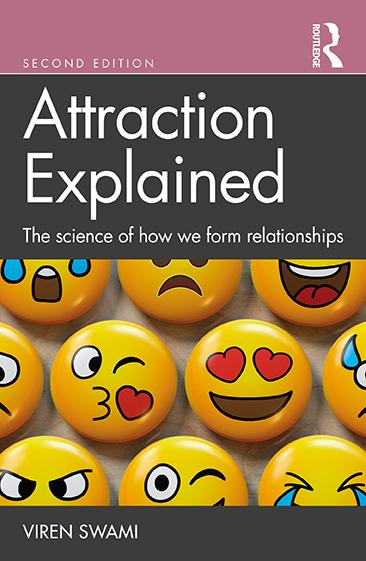
Virtual Zoom dates can lead to more successful long-term relationships, believes the author of Attraction Explained: The science of how we form relationships (Routledge).
In an updated edition of the book, published on 11 February, Viren Swami, Professor of Social Psychology at Anglia Ruskin University (ARU) and Perdana University, discusses the importance of communication before the first face-to-face date.
Text messaging allows for polished self-presentation, meaning online daters often idealise each other before meeting for the first time. The COVID-19 pandemic has led to a recent rise in Zoom dates and Professor Swami believes these “warts and all” virtual meetings can lead to more successful real-life relationships.
He explained: “When others selectively present themselves to us, whether through messages or through their profiles, we essentially fill in the blanks by over-emphasising positive qualities. If the initial text message exchanges suggest that a dater is funny, smart, or intelligent, we tend to exaggerate their appeal.
“One of the reasons why so many first dates don’t end well is that the daters can’t live up to each other’s high expectations when they meet face-to-face. When daters videoconference before meeting face-to-face, they don’t idealise their dates as much as when communication only takes place via text-based messaging.”
Professor Swami’s book also offers plenty of encouragement for couples currently apart due to the pandemic, whether through international travel restrictions, caring responsibilities, or bans on household mixing,
He added: “Countless couples have been forced to live apart, at least for a short period of time, during the pandemic and contrary to popular belief, long-distance relationships can actually flourish. Many studies suggest there aren’t any differences between those in long and close-proximity relationships when it comes to relationship satisfaction, levels of intimacy and affection, levels of commitment and trust, and nurturance of a partner.
“In fact, some studies have even shown that those in long-distance relationships have higher levels of satisfaction, report more love for their partners, have better patterns of communication, and are less likely to break up than those in close-proximity relationships. And of course, modern technology means long-distance couples are able to stay in constant touch wherever they are, which helps to generate a sense of shared space.
“Another reason why those in long-distance relationships report higher quality relationships is precisely because those relationships are challenging. In his 1957 book Cognitive Dissonance, Leon Festinger described a curious quirk of human thought – ‘effort justification’. When something requires sacrifice or effort to maintain, he said, we tend to value that thing more than if it were easy to achieve. Couples in long-distance relationships really value what they have and make the most of any time that they are able spend together.”
###
The second edition of Attraction Explained: The science of how we form relationships is published by Routledge on 11 February. Professor Swami will be delivering an online talk and answering questions on Wednesday, 10 February (7.30-9pm GMT). The public event is free to attend, but places must be reserved via the ARU website
Professor Swami will also be discussing the science of attraction live on TikTok on Friday, 12 February from 7pm (GMT). To watch, visit http://www.
Media Contact
Jon Green
[email protected]