Credit: Adapted from ACS Nano 2020, DOI: 10.1021/acsnano.0c05197
Injuries to peripheral nerves — tissues that transmit bioelectrical signals from the brain to the rest of the body — often result in chronic pain, neurologic disorders, paralysis or disability. Now, researchers have developed a stretchable conductive hydrogel that could someday be used to repair these types of nerves when there’s damage. They report their results in ACS Nano.
Injuries in which a peripheral nerve has been completely severed, such as a deep cut from an accident, are difficult to treat. A common strategy, called autologous nerve transplantation, involves removing a section of peripheral nerve from elsewhere in the body and sewing it onto the ends of the severed one. However, the surgery does not always restore function, and multiple follow-up surgeries are sometimes needed. Artificial nerve grafts, in combination with supporting cells, have also been used, but it often takes a long time for nerves to fully recover. Qun-Dong Shen, Chang-Chun Wang, Ze-Zhang Zhu and colleagues wanted to develop an effective, fast-acting treatment that could replace autologous nerve transplantation. For this purpose, they decided to explore conducting hydrogels — water-swollen, biocompatible polymers that can transmit bioelectrical signals.
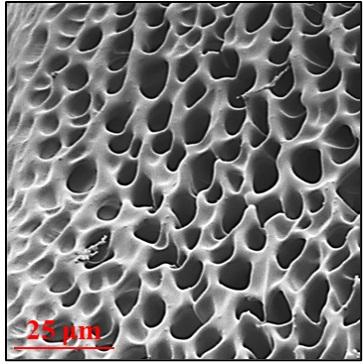
The researchers prepared a tough but stretchable conductive hydrogel containing polyaniline and polyacrylamide. The crosslinked polymer had a 3D microporous network that, once implanted, allowed nerve cells to enter and adhere, helping restore lost tissue. The team showed that the material could conduct bioelectrical signals through a damaged sciatic nerve removed from a toad. Then, they implanted the hydrogel into rats with sciatic nerve injuries. Two weeks later, the rats’ nerves recovered their bioelectrical properties, and their walking improved compared with untreated rats. Because the electricity-conducting properties of the material improve with irradiation by near-infrared light, which can penetrate tissues, it could be possible to further enhance nerve conduction and recovery in this way, the researchers say.
The authors acknowledge funding from the National Key Research and Development Program of China, the National Natural Science Foundation of China, the Program for Changjiang Scholars and Innovative Research Team in University, and Program B for Outstanding Ph.D. Candidate of Nanjing University.
The paper’s abstract will be available on October 7 at 8 a.m. Eastern time here: http://pubs.
The American Chemical Society (ACS) is a nonprofit organization chartered by the U.S. Congress. ACS’ mission is to advance the broader chemistry enterprise and its practitioners for the benefit of Earth and its people. The Society is a global leader in providing access to chemistry-related information and research through its multiple research solutions, peer-reviewed journals, scientific conferences, eBooks and weekly news periodical Chemical & Engineering News. ACS journals are among the most cited, most trusted and most read within the scientific literature; however, ACS itself does not conduct chemical research. As a specialist in scientific information solutions (including SciFinder® and STN®), its CAS division powers global research, discovery and innovation. ACS’ main offices are in Washington, D.C., and Columbus, Ohio.
To automatically receive news releases from the American Chemical Society, contact [email protected].
Follow us: Twitter | Facebook
###
Media Contact
Katie Cottingham
[email protected]