• HOME
  • NEWS
  • EXPLORE
    • CAREER
      • Companies
      • Jobs
    • EVENTS
    • iGEM
      • News
      • Team
    • PHOTOS
    • VIDEO
    • WIKI
  • BLOG
  • COMMUNITY
    • FACEBOOK
    • INSTAGRAM
    • TWITTER
Saturday, May 16, 2026
BIOENGINEER.ORG
No Result
View All Result
  • Login
  • HOME
  • NEWS
  • EXPLORE
    • CAREER
      • Companies
      • Jobs
        • Lecturer
        • PhD Studentship
        • Postdoc
        • Research Assistant
    • EVENTS
    • iGEM
      • News
      • Team
    • PHOTOS
    • VIDEO
    • WIKI
  • BLOG
  • COMMUNITY
    • FACEBOOK
    • INSTAGRAM
    • TWITTER
  • HOME
  • NEWS
  • EXPLORE
    • CAREER
      • Companies
      • Jobs
        • Lecturer
        • PhD Studentship
        • Postdoc
        • Research Assistant
    • EVENTS
    • iGEM
      • News
      • Team
    • PHOTOS
    • VIDEO
    • WIKI
  • BLOG
  • COMMUNITY
    • FACEBOOK
    • INSTAGRAM
    • TWITTER
No Result
View All Result
Bioengineer.org
No Result
View All Result
Home NEWS Science News Biology

European maize highlights the hidden differences within a species

Bioengineer by Bioengineer
July 27, 2020
in Biology
Reading Time: 2 mins read
0
IMAGE
Share on FacebookShare on TwitterShare on LinkedinShare on RedditShare on Telegram

IMAGE

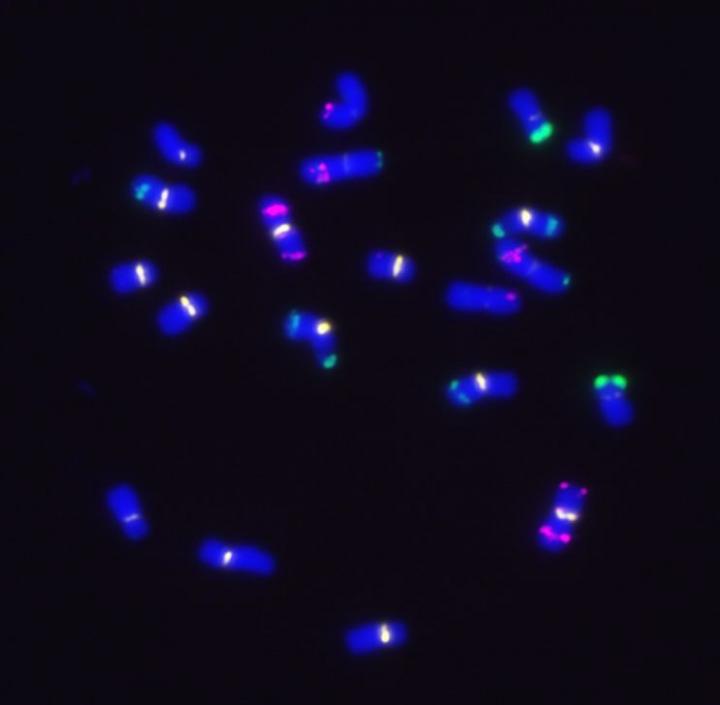
Credit: Picture : A. Ruban and A. Houben, IPK, Gatersleben

Maize (Zea mays ssp. mays) was initially domesticated by Native Americans over 10.000 years ago. Nowadays, America’s “favourite corn” is cultivated throughout the world and is used in varying ways, ranging from animal feed to biofuel. Maize has been able to adapt to different climates and conditions around the world, indicating that the genetic variability between lines must be large. And when considering that maize also is one of the plants which can reproduce via self- as well as cross-pollination, it becomes evident that sequencing the genome of only one maize line is insufficient, when attempting to fully understand the genetics of maize. Instead, for genetically diverse crops, researchers aim towards establishing the species’ pangenome – the entire sequence of all lines of a species.

Scientists from plant breeding and research institutions throughout Germany recently picked up this challenge in maize and published their contribution to the maize pangenome in the journal Nature Genetics.

Dent and flint corn are the two classes of maize with the greatest commercial importance. As such, it is unsurprising that the complete genome sequence of a dent maize line B73 was established as the go to reference for maize breeding and research. However, within their recent project, the researchers led by Dr. Klaus Haberer from the Helmholtz Center in Munich, concentrated on the investigation of four European flint lines. As Dr. Haberer let us know: “Whilst the dent line B73 is a high-quality reference sequence, very high diversity at the sequence level has been found between different maize lines. This indicates that the sequence of the line B73 captures only a portion of the maize pangenome.”

Within their research, the scientists utilised a complementary approach which combined modern sequencing techniques and bioinformatics with cytogenetic technologies. Whilst the sequencing techniques delivered the main share of information on the maize genomes, cytogenetic methods such as FISH (Fluorescence in situ hybridization) facilitated the researchers to test for misinterpretations of the sequenced genomes at the chromosomal level. But more importantly, it enabled the scientists to spot differences between the maize lines by looking through the microscope.

Prof. Dr. Andreas Houben, who led the cytogenetic tests at the Leibniz Institute of Plant Genetics and Crop Plant Research (IPK) in Gatersleben, told us: “Flint and dent maize have a high similarity on the gene level. However, both maize types have a large number of non-coding sequences, for example, so-called knob repeats, which vary between different lines. We were able to show these differences on the chromosomal level.”

The study of the flint lines is an important addition to the current maize pangenome. And maybe even more importantly, the findings show that while the overall conservation of the gene content within a species might be high, differences in the non-coding genome fraction exist. And these small differences help us to truly understand and utilize maize biology.

###

Media Contact
Prof. Dr. Andreas Houben
[email protected]

Related Journal Article

http://dx.doi.org/10.1038/s41588-020-0671-9

Tags: AgricultureBiodiversityBiologyGenesGeneticsPlant Sciences
Share12Tweet8Share2ShareShareShare2

Related Posts

Single mother must adapt swiftly — the survival of her colony depends on it — Biology

Single mother must adapt swiftly — the survival of her colony depends on it

May 15, 2026
Why Are Nearly Everyone Right-Handed? It Might Be Linked to How We Learned to Walk — Biology

Why Are Nearly Everyone Right-Handed? It Might Be Linked to How We Learned to Walk

May 15, 2026

Excessive Neuronal Activity Initiates Severe Autoimmune Brain Disorder

May 15, 2026

Precision Anti-Aging Strategies Focus on Eliminating Harmful Senescent Cells While Preserving Beneficial Ones

May 15, 2026
Please login to join discussion

POPULAR NEWS

  • Research Indicates Potential Connection Between Prenatal Medication Exposure and Elevated Autism Risk

    844 shares
    Share 338 Tweet 211
  • New Study Reveals Plants Can Detect the Sound of Rain

    730 shares
    Share 291 Tweet 182
  • Salmonella Haem Blocks Macrophages, Boosts Infection

    62 shares
    Share 25 Tweet 16
  • Breastmilk Balances E. coli and Beneficial Bacteria in Infant Gut Microbiomes

    58 shares
    Share 23 Tweet 15

About

We bring you the latest biotechnology news from best research centers and universities around the world. Check our website.

Follow us

Recent News

Metabolic Stress Worsens Parkinson’s via Mitochondrial Ferroptosis

Four New Hydroxyl Fatty Acids from Bacillus sp.

Validating B-IPQ Short Form for Older Colombians

Subscribe to Blog via Email

Enter your email address to subscribe to this blog and receive notifications of new posts by email.

Join 82 other subscribers
  • Contact Us

Bioengineer.org © Copyright 2023 All Rights Reserved.

Welcome Back!

Login to your account below

Forgotten Password?

Retrieve your password

Please enter your username or email address to reset your password.

Log In
No Result
View All Result
  • Homepages
    • Home Page 1
    • Home Page 2
  • News
  • National
  • Business
  • Health
  • Lifestyle
  • Science

Bioengineer.org © Copyright 2023 All Rights Reserved.