• HOME
  • NEWS
  • EXPLORE
    • CAREER
      • Companies
      • Jobs
    • EVENTS
    • iGEM
      • News
      • Team
    • PHOTOS
    • VIDEO
    • WIKI
  • BLOG
  • COMMUNITY
    • FACEBOOK
    • INSTAGRAM
    • TWITTER
Friday, March 27, 2026
BIOENGINEER.ORG
No Result
View All Result
  • Login
  • HOME
  • NEWS
  • EXPLORE
    • CAREER
      • Companies
      • Jobs
        • Lecturer
        • PhD Studentship
        • Postdoc
        • Research Assistant
    • EVENTS
    • iGEM
      • News
      • Team
    • PHOTOS
    • VIDEO
    • WIKI
  • BLOG
  • COMMUNITY
    • FACEBOOK
    • INSTAGRAM
    • TWITTER
  • HOME
  • NEWS
  • EXPLORE
    • CAREER
      • Companies
      • Jobs
        • Lecturer
        • PhD Studentship
        • Postdoc
        • Research Assistant
    • EVENTS
    • iGEM
      • News
      • Team
    • PHOTOS
    • VIDEO
    • WIKI
  • BLOG
  • COMMUNITY
    • FACEBOOK
    • INSTAGRAM
    • TWITTER
No Result
View All Result
Bioengineer.org
No Result
View All Result
Home NEWS Science News Biology

Crop pathogens ‘remarkably adaptable’

Bioengineer by Bioengineer
June 11, 2020
in Biology
Reading Time: 2 mins read
0
IMAGE
Share on FacebookShare on TwitterShare on LinkedinShare on RedditShare on Telegram

IMAGE

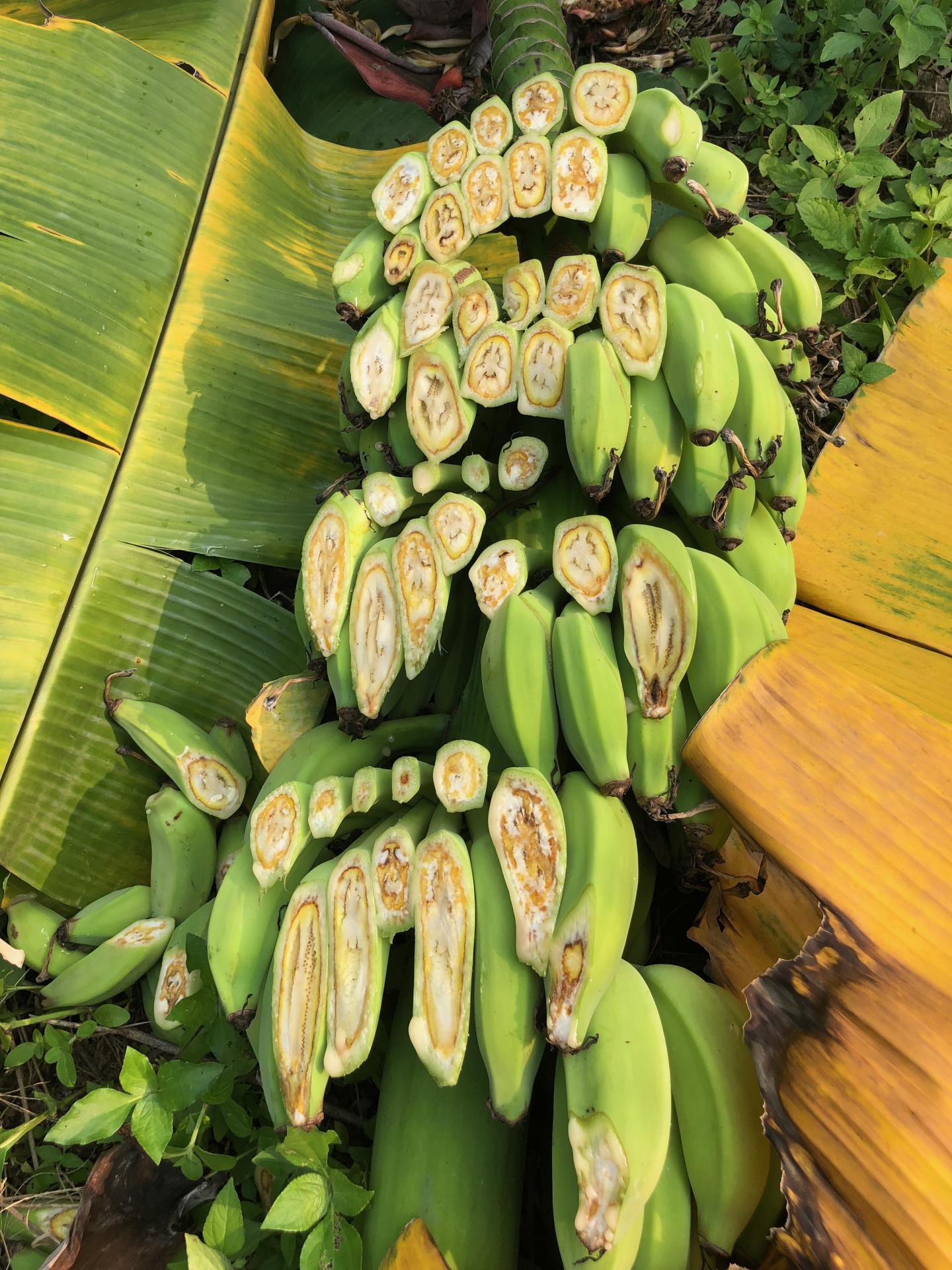
Credit: Clare Thatcher

Pathogens that attack agricultural crops show remarkable adaptability to new climates and new plant hosts, new research shows.

Researchers at the Department of Biosciences, University of Exeter studied the temperature preferences and host plant diversity of hundreds of fungi and oomycetes that attack our crops.

The researchers found that plant pathogens can specialise on particular temperatures or host plants, or have wide temperature or host ranges.

Lead author Professor Dan Bebber, a member of Exeter’s Global Systems Institute, said: “Traditionally, scientists have considered species to be specialists or generalists.

“Generalists are sometimes called ‘Jack of all trades, master of none’. Our analyses show that many plant pathogens are ‘Jack of some trades, master of others’.”

Tom Chaloner, an SWBIO DTP PhD student, said: “We have collated the largest dataset on plant pathogen temperature responses, and made this available for the scientific community.

“Our data allow us to test some of the most fundamental questions in ecology and evolution.

“For example, we found that temperature preferences are narrower when pathogens are growing within plants, demonstrating the difference between the so-called fundamental niche and the realised niche.”

The researchers used recently-developed statistical methods to investigate the co-evolution between pathogens and their hosts, showing that pathogens can readily evolve to attack new host plants.

“In an era of growing global population size, climate change and emerging threats to crop production and food security, our findings will be key to understanding where and when pathogens could strike next,” said co-author Professor Sarah Gurr.

###

The dataset produced by the study, funded by the Biotechnology and Biological Sciences Research Council (BBSRC), has been deposited in the open access Data Dryad repository and can be freely accessed by other researchers for further analysis (doi:10.5061/dryad.tqjq2bvw6).

The paper, published in the journal Nature Communications, is entitled: “Geometry and evolution of the ecological niche in plant-associated microbes.”

Media Contact
Alex Morrison
[email protected]

Related Journal Article

http://dx.doi.org/10.1038/s41467-020-16778-5

Tags: Agricultural Production/EconomicsAgricultureBiodiversityBiologyEcology/EnvironmentFertilizers/Pest ManagementFood/Food SciencePlant Sciences
Share12Tweet8Share2ShareShareShare2

Related Posts

How to sway group opinions: Encourage opponents to stay undecided

How to sway group opinions: Encourage opponents to stay undecided

March 23, 2026
Deep Learning Model Maps How Individual Cells Shape Disease Outcomes

Deep Learning Model Maps How Individual Cells Shape Disease Outcomes

March 20, 2026

Removing only 15 female sharks annually could endanger the entire population, scientists warn

March 20, 2026

Scientists Urge Fragrance Industry to Transition from Sustainability Talk to Active Funding of Plant Conservation

March 20, 2026
Please login to join discussion

POPULAR NEWS

  • blank

    Revolutionary AI Model Enhances Precision in Detecting Food Contamination

    96 shares
    Share 38 Tweet 24
  • Imagine a Social Media Feed That Challenges Your Views Instead of Reinforcing Them

    1003 shares
    Share 397 Tweet 248
  • Uncovering Functions of Cavernous Malformation Proteins in Organoids

    54 shares
    Share 22 Tweet 14
  • Promising Outcomes from First Clinical Trials of Gene Regulation in Epilepsy

    51 shares
    Share 20 Tweet 13

About

We bring you the latest biotechnology news from best research centers and universities around the world. Check our website.

Follow us

Recent News

In-Sensor Cryptography Links Physical Process to Digital Identity

Can Psychosocial Factors Influence Cancer Risk?

Depression Factors in Elderly: Pre vs. Post-COVID Analysis

Subscribe to Blog via Email

Success! An email was just sent to confirm your subscription. Please find the email now and click 'Confirm' to start subscribing.

Join 78 other subscribers
  • Contact Us

Bioengineer.org © Copyright 2023 All Rights Reserved.

Welcome Back!

Login to your account below

Forgotten Password?

Retrieve your password

Please enter your username or email address to reset your password.

Log In
No Result
View All Result
  • Homepages
    • Home Page 1
    • Home Page 2
  • News
  • National
  • Business
  • Health
  • Lifestyle
  • Science

Bioengineer.org © Copyright 2023 All Rights Reserved.