• HOME
  • NEWS
  • EXPLORE
    • CAREER
      • Companies
      • Jobs
    • EVENTS
    • iGEM
      • News
      • Team
    • PHOTOS
    • VIDEO
    • WIKI
  • BLOG
  • COMMUNITY
    • FACEBOOK
    • INSTAGRAM
    • TWITTER
Saturday, February 7, 2026
BIOENGINEER.ORG
No Result
View All Result
  • Login
  • HOME
  • NEWS
  • EXPLORE
    • CAREER
      • Companies
      • Jobs
        • Lecturer
        • PhD Studentship
        • Postdoc
        • Research Assistant
    • EVENTS
    • iGEM
      • News
      • Team
    • PHOTOS
    • VIDEO
    • WIKI
  • BLOG
  • COMMUNITY
    • FACEBOOK
    • INSTAGRAM
    • TWITTER
  • HOME
  • NEWS
  • EXPLORE
    • CAREER
      • Companies
      • Jobs
        • Lecturer
        • PhD Studentship
        • Postdoc
        • Research Assistant
    • EVENTS
    • iGEM
      • News
      • Team
    • PHOTOS
    • VIDEO
    • WIKI
  • BLOG
  • COMMUNITY
    • FACEBOOK
    • INSTAGRAM
    • TWITTER
No Result
View All Result
Bioengineer.org
No Result
View All Result
Home NEWS Science News Health

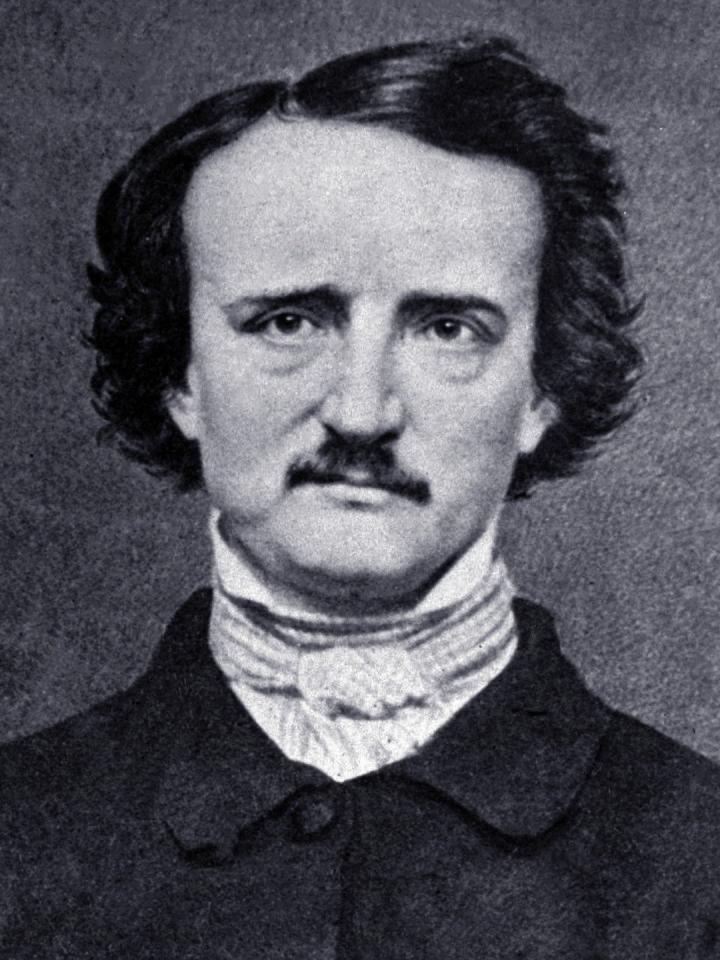
Why Edgar Allan Poe probably did not kill himself

Bioengineer by Bioengineer
February 24, 2020
in Health
Reading Time: 2 mins read
0
IMAGE
Share on FacebookShare on TwitterShare on LinkedinShare on RedditShare on Telegram

IMAGE

Credit: Lancaster University


A computational analysis of language used by the writer Edgar Allan Poe has revealed that his mysterious death was unlikely to have been suicide.

The author, poet, editor, and literary critic died in 1849 after spending several days in hospital while in a state of delirium. To date, Poe’s death remains an unsolved enigma, with his contemporary, poet Charles Baudelaire even speculating that the incident was “almost a suicide, a suicide prepared for a long time”.

But psychologist Dr Ryan Boyd from Lancaster University and his colleague — Hannah Dean from the University of Texas at Austin — have found that Poe’s psychological markers of depression are not consistent with suicide.

This research has now been published in the Journal of Affective Disorders.

Dr Boyd said: “My hunch is that he was indeed spiralling into a depression toward the end of his life, but that he didn’t kill himself.”

Using computerized language analysis, they analysed 309 of Poe’s personal letters, 49 poems, and 63 short stories and investigated whether a pattern of linguistic cues consistent with depression and suicidal cognition were discernible throughout the writer’s life, particularly in his final years.

They focused on five measures which have been established as diagnostic of depression and/or suicidality;

  • Increased use of first-person singular pronouns (e.g., words like I, me, and my)
  • Increased use of negative emotion words (bad, sad, angry)
  • More cognitive processing words (think, understand, know)
  • Fewer positive emotion words (happy, good, terrific)
  • Fewer first-person plural pronouns (we, us, our).

These linguistic markers of depression spiked during negative events in Poe’s life, like the death of his wife. Past research has shown that depressive language patterns tend to dramatically rise leading up to one’s death by suicide, however, this pattern did not consistently emerge in the last year of Poe’s life.

Poe was known to have suffered from regular bouts of severe depression and also had drug and alcohol problems. He lost his parents as a two year old and was devastated first by the death of his foster mother and then by that of his own wife Virginia Clemm Poe in 1847.

The researchers concluded: “Significant, consistent patterns of depression were not found and do not support suicide as a cause of death. However, linguistic evidence was found suggesting the presence of several potential depressive episodes over the course of Poe’s life – these episodes were the most pronounced during years of Poe’s greatest success, as well as those following the death of his late wife.”

“Our analyses suggest that he struggled deeply with success, with linguistic markers of depression peaking during the times of his greatest fame and popularity in 1843, 1845 and 1849.”

###

Media Contact
Gillian Whitworth
[email protected]
44-152-459-2612

Related Journal Article

http://dx.doi.org/10.1016/j.jad.2020.01.098

Tags: AlcoholBehaviorDeath/DyingDepression/AngerDrugsLanguage/Linguistics/SpeechMental HealthPersonality/AttitudeSocial/Behavioral ScienceStress/Anxiety
Share13Tweet8Share2ShareShareShare2

Related Posts

Evaluating Pediatric Emergency Care Quality in Ethiopia

February 7, 2026

TPMT Expression Predictions Linked to Azathioprine Side Effects

February 7, 2026

Improving Dementia Care with Enhanced Activity Kits

February 7, 2026

Decoding Prostate Cancer Origins via snFLARE-seq, mxFRIZNGRND

February 7, 2026
Please login to join discussion

POPULAR NEWS

  • Robotic Ureteral Reconstruction: A Novel Approach

    Robotic Ureteral Reconstruction: A Novel Approach

    82 shares
    Share 33 Tweet 21
  • Digital Privacy: Health Data Control in Incarceration

    63 shares
    Share 25 Tweet 16
  • Study Reveals Lipid Accumulation in ME/CFS Cells

    57 shares
    Share 23 Tweet 14
  • Breakthrough in RNA Research Accelerates Medical Innovations Timeline

    53 shares
    Share 21 Tweet 13

About

We bring you the latest biotechnology news from best research centers and universities around the world. Check our website.

Follow us

Recent News

Evaluating Pediatric Emergency Care Quality in Ethiopia

TPMT Expression Predictions Linked to Azathioprine Side Effects

Improving Dementia Care with Enhanced Activity Kits

Subscribe to Blog via Email

Success! An email was just sent to confirm your subscription. Please find the email now and click 'Confirm' to start subscribing.

Join 73 other subscribers
  • Contact Us

Bioengineer.org © Copyright 2023 All Rights Reserved.

Welcome Back!

Login to your account below

Forgotten Password?

Retrieve your password

Please enter your username or email address to reset your password.

Log In
No Result
View All Result
  • Homepages
    • Home Page 1
    • Home Page 2
  • News
  • National
  • Business
  • Health
  • Lifestyle
  • Science

Bioengineer.org © Copyright 2023 All Rights Reserved.