A team of researchers piloted a Spanish version of an evidence-based English-language cognitive intervention developed at Kessler Foundation, signaling an important step toward culturally appropriate care for Spanish speakers with multiple sclerosis
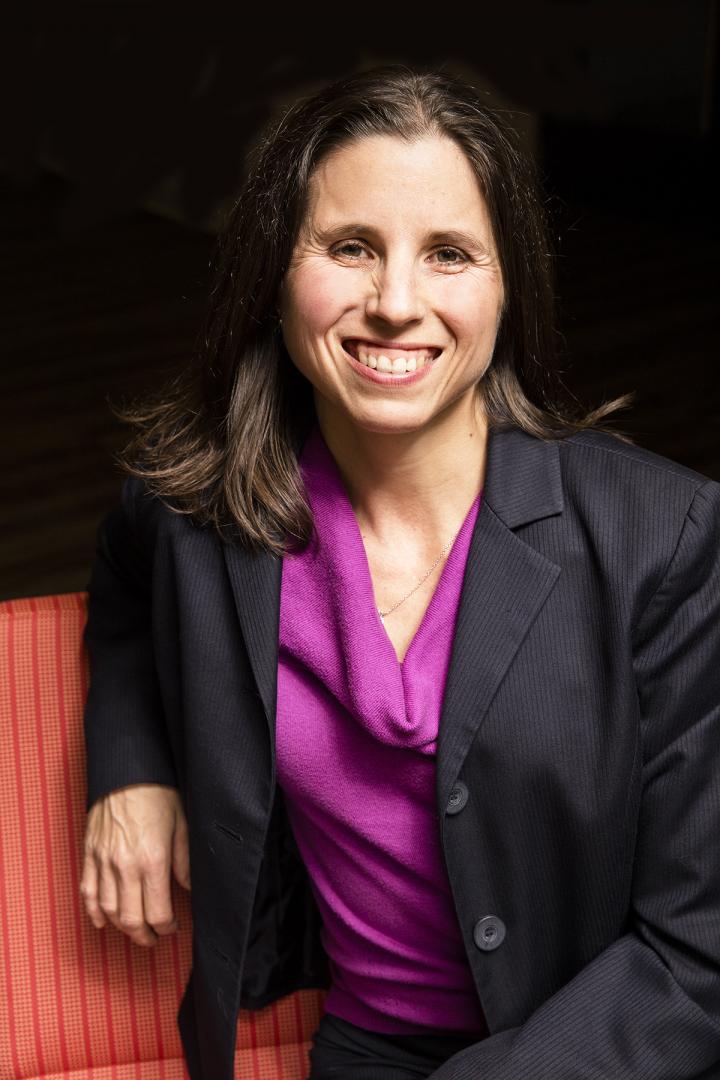
Credit: Kessler Foundation/Jody Banks
East Hanover, NJ. February 19, 2020. A team of researchers reported preliminary findings for efficacy of the Spanish version of the modified Story Memory Technique, a cognitive intervention developed at Kessler Foundation (KF-mSMT™). Their study, conducted in Mexicans with multiple sclerosis, is an important step toward addressing the void in evidence-based rehabilitative interventions for treating the cognitive effects of multiple sclerosis across diverse cultural populations. The article, “Efficacy of the Spanish modified Story Memory Technique in Mexicans with multiple sclerosis: A pilot randomized controlled trial,” (doi: 10.3233/NRE-192808) was epublished on November 28, 2019 by NeuroRehabilitation.
The authors are Denise Krch, PhD, Anthony Lequerica, PhD, and Nancy Chiaravalloti, PhD, of Kessler Foundation, Adriana Aguayo Arelis, MSc, and Brenda V. Rabago Barajas, MS, of Universidad Enrique D´?az de Leon and the Mexican MS Foundation, Guadalajara, Mexico, and Juan Carlos Arango-Lasprilla, MD, of Cruces University Hospital, Bizkaia, Spain, Basque Foundation for Science, Bilbao, Spain, and University of the Basque Country, Leoia, Spain.
While problems with learning and memory occur across populations with multiple sclerosis around the world, the availability of evidence-based cognitive interventions in different languages is limited. The lack of interventions in Spanish presents a barrier to the rehabilitation of many individuals in the Hispanic community who have cognitive deficits caused by multiple sclerosis. An international team of researchers has adapted the English language KF-mSMT into Spanish, for use in the cognitive rehabilitation of Mexicans with multiple sclerosis.
In this pilot study, 20 participants with multiple sclerosis, relapsing-remitting type, were randomized to either treatment (n?=?10) or placebo control (n?=?10) groups. The treatment group received the Spanish adaptation of the KF-mSMT, a 10-session intervention that teaches imagery and context to facilitate learning. The control group participated in 10 sessions based on similar content and presentation. All participants underwent baseline and follow-up neuropsychological assessments. Individuals in the treatment group showed significant improvements in learning and life satisfaction relative to the control group, suggesting that that this adaptation of the KF-mSMT may be an effective rehabilitative tool in Spanish-speaking populations with MS, according to Dr. Krch, senior research scientist in the Center for Traumatic Brain Injury Research.
“This is an example of how cultural adaptation can be an effective way to extend evidence-based interventions to non-English speaking populations,” said Dr. Krch. “The positive outcomes seen in this pilot study of urban-based Mexicans have important implications,” she noted. “While further testing is needed, we anticipate that this adaptation of the modified Story Memory Technique will be applicable to the diverse Spanish-speaking population in the U.S., in addition to those with Mexican heritage.”
###
Kessler Foundation researchers have documented the efficacy of this tool in the U.S. for English-speaking populations with traumatic brain injury as well as multiple sclerosis. “Based on our prior research,” noted Dr. Krch, “the modified Story Memory Technique may also prove useful in the rehabilitation of Spanish-speakers with cognitive deficits caused by traumatic brain injury.”
The KF-mSMT is available from Kessler Foundation in English and Spanish for use by rehabilitation professionals. Contact the Foundation by email at [email protected]
Funding: National Institute on Disability Independent Living and Rehabilitation Research (H133G090078)
About MS Research at Kessler Foundation
Kessler Foundation’s cognitive rehabilitation research in MS is funded by grants from the National Institutes of Health, the National Institute on Disability, Independent Living, and Rehabilitation Research, National MS Society, Consortium of Multiple Sclerosis Centers, the Patterson Trust, Biogen Idec, Hearst Foundations, the International Progressive MS Alliance, and Kessler Foundation. Under the leadership of John DeLuca, PhD, senior VP for Research & Training, and Nancy Chiaravalloti, PhD, director of the Centers for Neuropsychology, Neuroscience and Traumatic Brain Injury Research, scientists have made important contributions to the knowledge of cognitive decline in MS and developed new treatments. Collaborations with the Center for Mobility and Rehabilitation Engineering Research have resulted in new lines of research aimed at improved both cognitive and motor functions. Clinical studies span new learning, memory, executive function, attention and processing speed, emotional processing, employment, cognitive fatigue, mobility, and the interrelatedness of cognitive and physical deficits. Research tools include innovative applications of neuroimaging, mobile imaging technologies, robotics, eye-tracking, virtual reality, and other technologies. Neuroimaging studies are conducted at the research-dedicated Rocco Ortenzio Neuroimaging Center at Kessler Foundation. Kessler researchers and clinicians have faculty appointments in the department of Physical Medicine and Rehabilitation at Rutgers New Jersey Medical School.
About Kessler Foundation
Kessler Foundation, a major nonprofit organization in the field of disability, is a global leader in rehabilitation research that seeks to improve cognition, mobility and long-term outcomes, including employment, for people with neurological disabilities caused by diseases and injuries of the brain and spinal cord. Kessler Foundation leads the nation in funding innovative programs that expand opportunities for employment for people with disabilities. For more information, visit KesslerFoundation.org.
Stay Connected
Twitter | http://Twitter.
Facebook | http://Facebook.
YouTube | http://Youtube.
Instagram | http://Instagram.
iTunes & SoundCloud | http://Soundcloud.
For more information, or to interview an expert,
Contact: Carolann Murphy, 973.324.8382, [email protected]
Media Contact
Carolann Murphy
[email protected]
973-324-8382