Credit: Christoph Fink
Scientists from the University of Helsinki have figured out how to mine people’s online reactions to endangered animals and plants, so that they can reduce the chance of pushing species toward extinction.
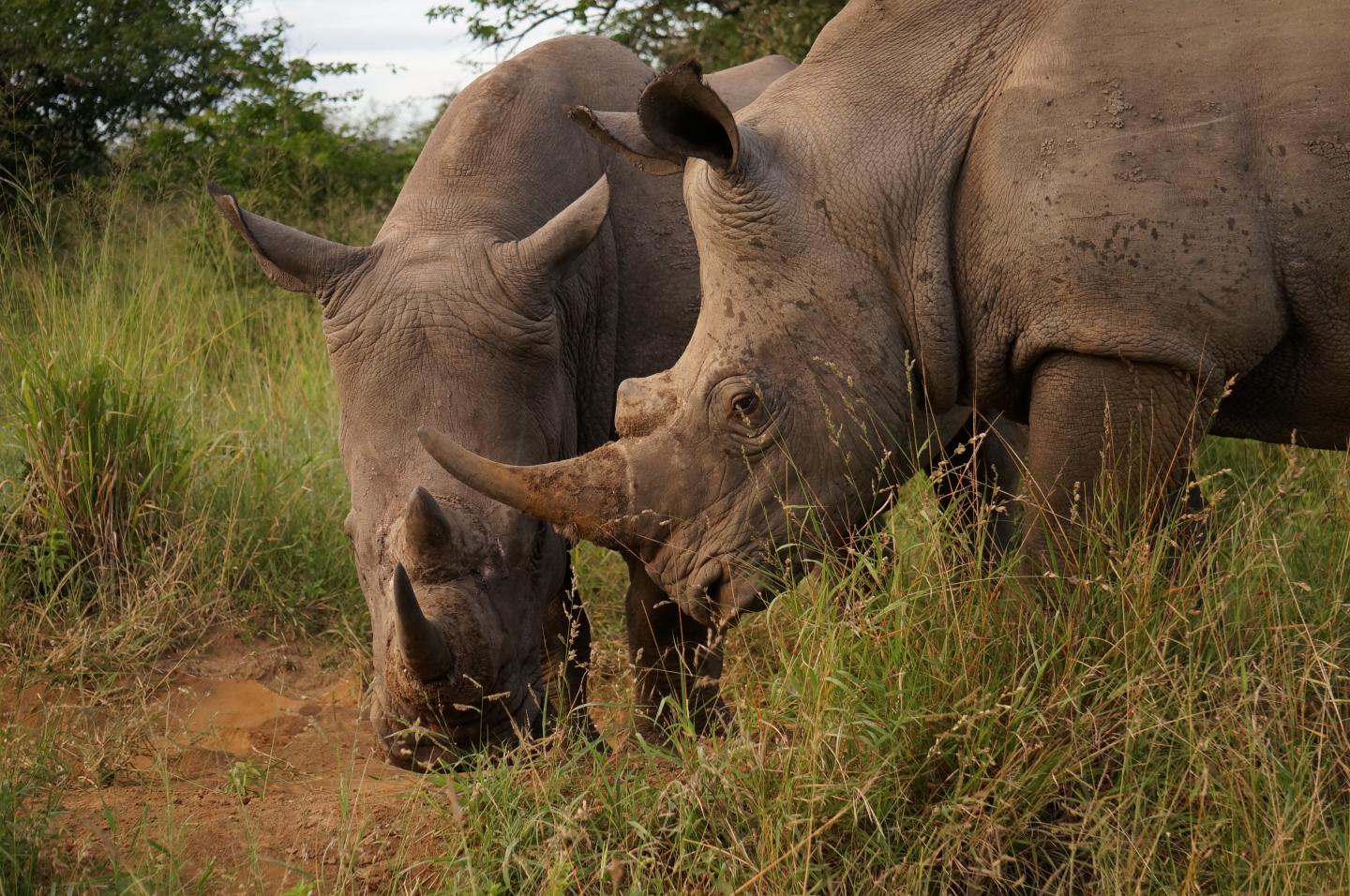
When the last male northern white rhinoceros died in March 2018, online news printed obituaries, and millions of people grieved on social media. This one event alone quadrupled the number of posts using the keyword rhino, with the general sentiment expressed becoming distinctly negative.
Researchers at the Helsinki Lab of Interdisciplinary Conservation Science are keeping tabs on online trends that affect rhinos and other endangered species. They have developed a computer algorithm that continuously measures the volume of online discussions on the topic, and measures the emerging sentiments from users.
And it’s this key information that alerts the scientists whenever the average sentiment exceeds the norm, highlighting that a major event affecting species has occurred.
In their article published in the journal Biological Conservation, lead researcher Christoph Fink and his team highlight the possibilities and the precision of their online-mining method. Compiling an exhaustive list of all rhino-related online events that happened around the world over five months, the researchers’ method successfully identified all the major rhino-related events.
“We found that social-media users and online news writers care most about rhinos when tragic events take place, such as the death of the last northern white rhino”, Mr. Fink said. “But people love to share happy moments too, such as a rhino calf being born in a zoo.”
Social media posts and online news articles mostly agree on which events are important, the researchers found. However, most posts came from countries that do not have rhinos.
“We don’t think that this had much to do with the generally poorer internet access in countries where wild rhinos live, but more because many environmental agencies are based in Europe and in North America,” Mr Fink added.
New methods for complex data
“We’re combining technologies from several fields, such as computer science, geography, and linguistics,” Mr. Fink said. “Automatic sentiment analysis reveals the feelings people express in text, and other so-called natural language processing techniques have not been used much in conservation science.”
The research team has collected around 5000 Twitter posts and 1000 online news articles in 20 different languages each day over the last five years. “But not every post is relevant”, explains Dr Anna Hausmann, one of the team members, “It’s so much data that we have to boil it down to the essential information. For instance, a government official might want to keep an eye on if and how people embrace a new conservation action, but they cannot possibly look through tens of thousands of posts each day to get the vibe of the population”.
Versatile applications
The researchers’ new method can now be used for a wide range of conservation applications. Understanding how the public feels about the protection of certain animals, plants or landscapes will help in designing conservation policies that will be widely accepted, or to adapt strategies facing pushback.
The algorithm can also slow the spread of misinformation, fight prejudices, and debunk ineffective solutions promoted in social-media bubbles. The method can also be used to measure the effectiveness of education programmes and outreach campaigns, and it serves as a good starting point for gathering feedback on conservation tourism.
“We have finally shown how to use online network information to help conserve endangered animals and plants”, said team leader, Associate Professor Enrico Di Minin. “Ultimately, we want to gain a deeper understanding of how much people care about other species, and how much they are willing to invest to save them.”
“Discerning how much people want to conserve species is essential for fighting the environmental crises unfolding around the world.”
###
Reference: Online sentiment towards iconic species: Christoph Fink, Anna Hausmann, Enrico Di Minin. Biological Conservation, https:/
More details:
Christoph Fink
[email protected]
+358 41 729 2664
@chrxf
http://helsinki.
@HELICS_Lab
Media Contact
Riitta-Leena Inki
[email protected]
358-504-485-770
Original Source
https:/
Related Journal Article
http://dx.