• HOME
  • NEWS
  • EXPLORE
    • CAREER
      • Companies
      • Jobs
    • EVENTS
    • iGEM
      • News
      • Team
    • PHOTOS
    • VIDEO
    • WIKI
  • BLOG
  • COMMUNITY
    • FACEBOOK
    • INSTAGRAM
    • TWITTER
Tuesday, November 10, 2026
BIOENGINEER.ORG
No Result
View All Result
  • Login
  • HOME
  • NEWS
  • EXPLORE
    • CAREER
      • Companies
      • Jobs
        • Lecturer
        • PhD Studentship
        • Postdoc
        • Research Assistant
    • EVENTS
    • iGEM
      • News
      • Team
    • PHOTOS
    • VIDEO
    • WIKI
  • BLOG
  • COMMUNITY
    • FACEBOOK
    • INSTAGRAM
    • TWITTER
No Result
View All Result
Bioengineer.org
No Result
View All Result
Home NEWS Science News Biology

‘Ibiza is different’, genetically

Bioengineer by Bioengineer
February 26, 2019
in Biology
Reading Time: 3 mins read
0
IMAGE
Share on FacebookShare on TwitterShare on LinkedinShare on RedditShare on Telegram

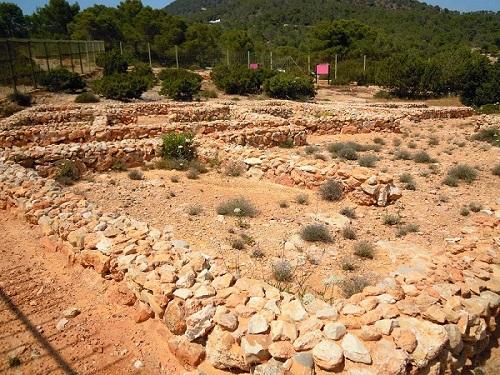
An investigation reveals that Ibizans are genetically different from the rest of Spain inhabitants. The genetic difference is comparable to that between Basques and the rest of peninsular inhabitants, considered a genetic anomaly to date.
IMAGE

Credit: UPF

Ibiza is different.” That is what the hundreds of standard-bearers of the “hippie” movement who visited the Pitiusan Island during the 60s thought, fascinated by its climate and its unexplored nature. What they did not imagine was that the utmost unique feature of the island was in its inhabitants. Now a study led by Francesc Calafell, principal investigator of the Institute of Evolutionary Biology (IBE) – a mixed center of the UPF and the Consejo Superior de Investigaciones Científicas (CSIC) reveals that the genes of Ibiza natives are really different. Yes indeed, the island is unique.

The piece of work, published in the European Journal of Human Genetics with the collaboration of researchers from the American University of Lebanon and the University of Otago, reveals that current Ibizans come from the Catalan invaders who repopulated the island from the 13th century.

The result seems to conflict with the history of the island, which had been invaded and inhabited by many peoples previously, from the Phoenicians and Carthaginians to the Romans and Arabs. In a previous work – this time led by Zalloua and with the collaboration of Francesc Calafell and Benjamí Costa, Director of the Archaeological Museum of Ibiza -, researchers had already observed that the original settlers, the Phoenicians, did not seem to have much in common with current Ibizans, but had not located the source of their genetic heritage.

“The famine that followed the Franco-Ottoman attack in 1536 along with the epidemic of bubonic plague that struck Ibizan people in 1652 was a major demographic crisis for the island; this would explain the current absence of ancient genetic traits in the islanders, as well as their differentiation, since the current population descends from a small number of survivors of these calamities, “says Simone Biagini, PhD student in Francesc Calafell’s group and first author of the study.

To discover the origin of Ibizan genes, scientists have determined the genetic information of 163 volunteers from 3 regions of Spain (Catalonia, Valencia and the Balearic Islands) and have used 69 Spanish samples previously published. To evaluate the connection with the Phoenician genome, samples of ancient DNA from the Phoenician necropolis of Puig des Molins, in Ibiza, and 257 samples of modern DNA from the Middle East and North Africa have been used.

“Although we expected that there was no genetic link with the Phoenicians, the genetic singularity of today’s Ibizan people is very surprising,” says Benjamí Costa, who has collaborated in the genetic analysis of ancient Phoenician samples.

The information on the Ibizan population contributed by the study of Calafell, also a professor at UPF, could shed light on other scenarios where there has been a similar geographical segregation. However, not all Mediterranean islands follow the same pattern: while Ibiza and Sardinia are clearly differentiated populations, Mallorca, Menorca and Sicily peoples are much more similar to mainland inhabitants.

###

The study has been financed by the Agencia Estatal de Investigación and the Fondo Europeo de Desarollo Regional (FEDER), the Agència de Gestió d’Ajuts Universitaris i de la Recerca (Generalitat de Catalunya) and the Unidad de Excelencia María de Maeztu.

Media Contact
Gerard Vall-llovera
gerard.vallllovera@upf.edu

Original Source

https://www.upf.edu/home/-/asset_publisher/1fBlrmbP2HNv/content/id/222641424/maximized#.XHQONqL0ncs

Related Journal Article

http://dx.doi.org/10.1038/s41431-019-0361-1

Tags: ArchaeologyGenesGenetics
Share12Tweet8Share2ShareShareShare2

Related Posts

IPEC-J2 Cells Recapitulate Key Pathway Responses to PEDV Infection in Piglet Jejunum

IPEC-J2 Cells Recapitulate Key Pathway Responses to PEDV Infection in Piglet Jejunum

November 10, 2026
Dual Inoculation Enhances Phosphorus Nutrition and Defenses in Salt-Stressed Alfalfa

Dual Inoculation Enhances Phosphorus Nutrition and Defenses in Salt-Stressed Alfalfa

November 10, 2026

Polyethylene Microplastics Worsen Cotton Verticillium Wilt and Disrupt Rhizosphere Microbes

November 10, 2026

National Whole Genome Sequencing Biobanks Reshape Global Disease Research and Precision Medicine

November 10, 2026
Please login to join discussion

POPULAR NEWS

  • Intranasal Lidocaine Spray Eases Nasogastric Tube Placement in Adult Emergency Patients

    Intranasal Lidocaine Spray Eases Nasogastric Tube Placement in Adult Emergency Patients

    29 shares
    Share 12 Tweet 7
  • Hospital Outbreaks Disseminate Ceftazidime-Avibactam and Cefiderocol Co-Resistant Klebsiella Pneumoniae Clones

    29 shares
    Share 12 Tweet 7
  • PET Imaging Shows Aging Reduces Human Brain Ascorbic Acid Transport via Choroid Plexus

    29 shares
    Share 12 Tweet 7
  • Plant Hemoglobin Expression Impairs Aerobic Guaiacol Bioconversion in Pseudomonas putida

    29 shares
    Share 12 Tweet 7

About

We bring you the latest biotechnology news from best research centers and universities around the world. Check our website.

Follow us

Recent News

Model Finds Empagliflozin and Semaglutide Cost-Effective Against Kidney Damage in Germany

IPEC-J2 Cells Recapitulate Key Pathway Responses to PEDV Infection in Piglet Jejunum

Dual Inoculation Enhances Phosphorus Nutrition and Defenses in Salt-Stressed Alfalfa

Subscribe to Blog via Email

Enter your email address to subscribe to this blog and receive notifications of new posts by email.

Join 87 other subscribers
  • Contact Us

Bioengineer.org © Copyright 2023 All Rights Reserved.

Welcome Back!

Login to your account below

Forgotten Password?

Retrieve your password

Please enter your username or email address to reset your password.

Log In
No Result
View All Result
  • Homepages
    • Home Page 1
    • Home Page 2
  • News
  • National
  • Business
  • Health
  • Lifestyle
  • Science

Bioengineer.org © Copyright 2023 All Rights Reserved.